 9800+ TRUSTPILOT REVIEWS


 EN
EN DE
DE FR
FR NL
NL
A sofa is four materials stacked on top of each other: a frame, a suspension layer, a filling, and an upholstery cover. Each of the four can be specified well or specified badly. The difference between a sofa that lasts 4 years and one that lasts 20 is rarely about the look. It is about what is hidden under the cushions.
This guide walks through every material that goes into a modern sofa, what the spec sheet should say, and what to ask a supplier when the spec is missing. Frame timbers, foam densities by kg/m³, Martindale rub counts for fabric, leather grades, and leg materials with Janka hardness figures included.
The skeleton decides the lifespan
The frame is the one part of the sofa you cannot replace without throwing the whole piece away. Get it right and the cushions, springs, and cover can be refreshed when they wear out. Get it wrong and the sofa is rubbish in five years regardless of what is wrapped around it.
The frames we trust on the shop floor sit in three tiers, in this order:
- FSC-certified kiln-dried hardwood (beech, oak, ash): moisture content stabilised at 8 to 10 percent, mortise-and-tenon or doweled joints, glued and corner-blocked. Lasts 20 years and survives reupholstery. Adds €150 to €400 to the price versus engineered alternatives.
- Engineered birch plywood (12-ply or higher): dimensionally stable, resists warping in centrally heated rooms, takes screws and dowels without splitting. The strong middle option, common on €800 to €1,500 sofas in our range.
- MDF or particleboard: avoid on any structural component. Used as a back panel or skirt, fine. Used as a seat rail or arm post, the frame fails within 4 to 7 years. Any sofa under €499 is almost certainly MDF-cored.
What you actually sit on
Cushion fills make or break daily comfort. The three constructions below cover 95 percent of the European market. Each has a different feel, a different lifespan, and a different price.
HR foam (high resilience)
Polyurethane foam with a denser cell structure than standard PU. Seat cushions should be 35 kg/m³ minimum for daily use and 45 to 50 kg/m³ on family sofas. Anything labelled HR30 or below is bargain foam that compresses 30 percent within 18 months.
Back cushions can run lighter at 25 to 30 kg/m³ since they bear less weight. Lifespan: 8 to 12 years for HR45, 4 to 6 years for HR25.
Feather-wrapped foam
An HR foam core wrapped in a chamber of down or duck feathers. The feathers give the soft, sink-in feel of an upholstered armchair while the core stops the cushion from going flat. Needs plumping every few days; that is the trade-off for the comfort.
Common on Scandinavian and mid-century styled sofas. Recognise it by the cushion that needs a quick punch to look tidy.
Pocket-spring core
Individual fabric-pocketed springs (the same construction as a quality mattress) topped with HR foam and sometimes feather. The springs distribute weight evenly across the cushion and do not compress with age. The most durable fill on the market.
Adds €200 to €500 to the sofa price. Worth it on sofas that get heavy daily use, less relevant on a guest-room sofa. Pairs well with our Scandinavian sofa range.
Featured in this guide


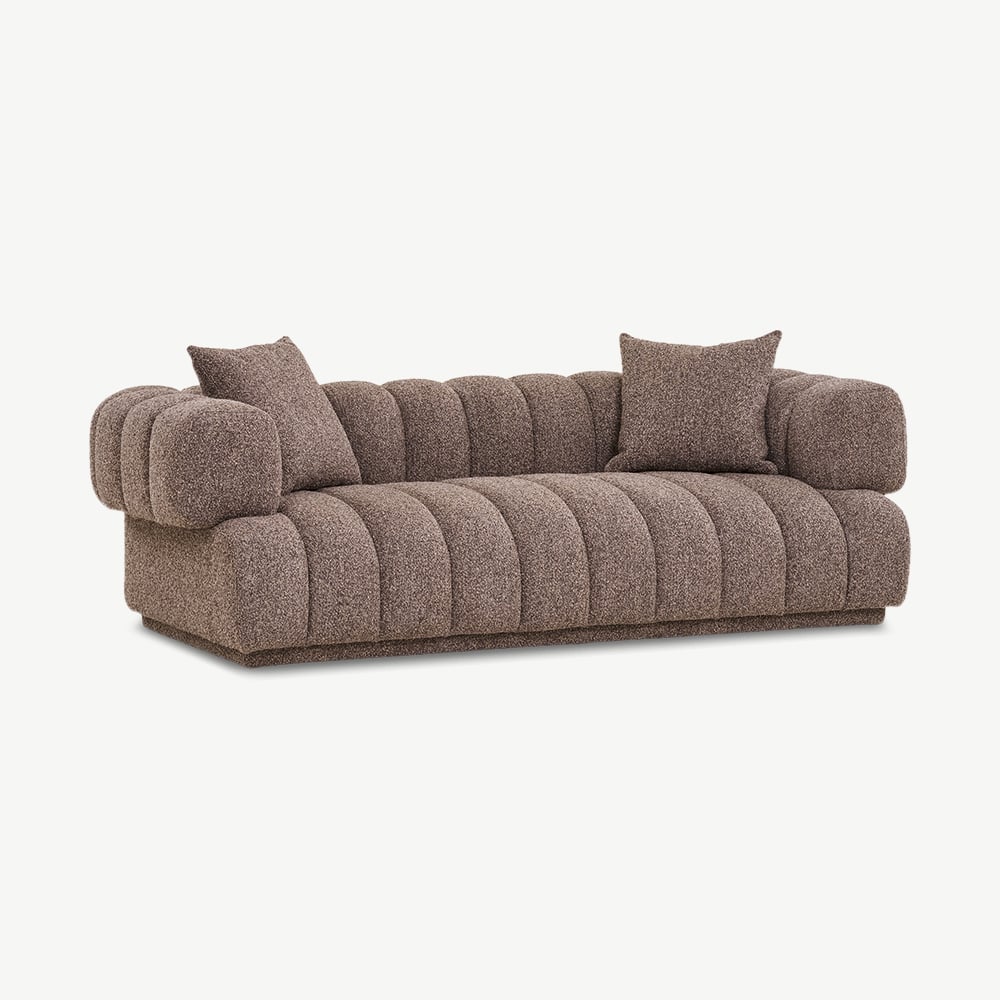
Upholstery is where it gets complicated
The cover is the part you see, touch, and clean. It is also where most buyers get oversold. Below is the Martindale test result (an abrasion count: how many cycles of rubbing the fabric survives before it shows wear) for the eight most common sofa fabrics and leathers in our range. 25,000 rubs is the floor for daily-use domestic sofas.
| Material | Martindale / grade | Best for |
|---|---|---|
| Performance fabric (Crypton, Aquaclean) | 50,000 to 100,000 | Family, pets, daily use |
| Tight-weave microfibre | 40,000 to 60,000 | Pet households, kids |
| Heavy linen (mixed weave) | 25,000 to 40,000 | Style-led households |
| Velvet (polyester, short pile) | 25,000 to 50,000 | Statement rooms |
| Boucle (wool blend) | 15,000 to 25,000 | Lower-traffic rooms |
| Full-grain leather | 25+ year life | Long-keep purchases |
| Top-grain leather | 15 to 20 year life | Mid-tier longevity |
| Corrected-grain (pigmented) | 8 to 12 year life | Uniform-look budget |
Bonded leather (leather scraps glued to a polyurethane backing) is not on the table because we do not sell it. It peels within 3 years regardless of how it is cared for. If a sofa is marketed as "leather" at under €600, it is almost always bonded.
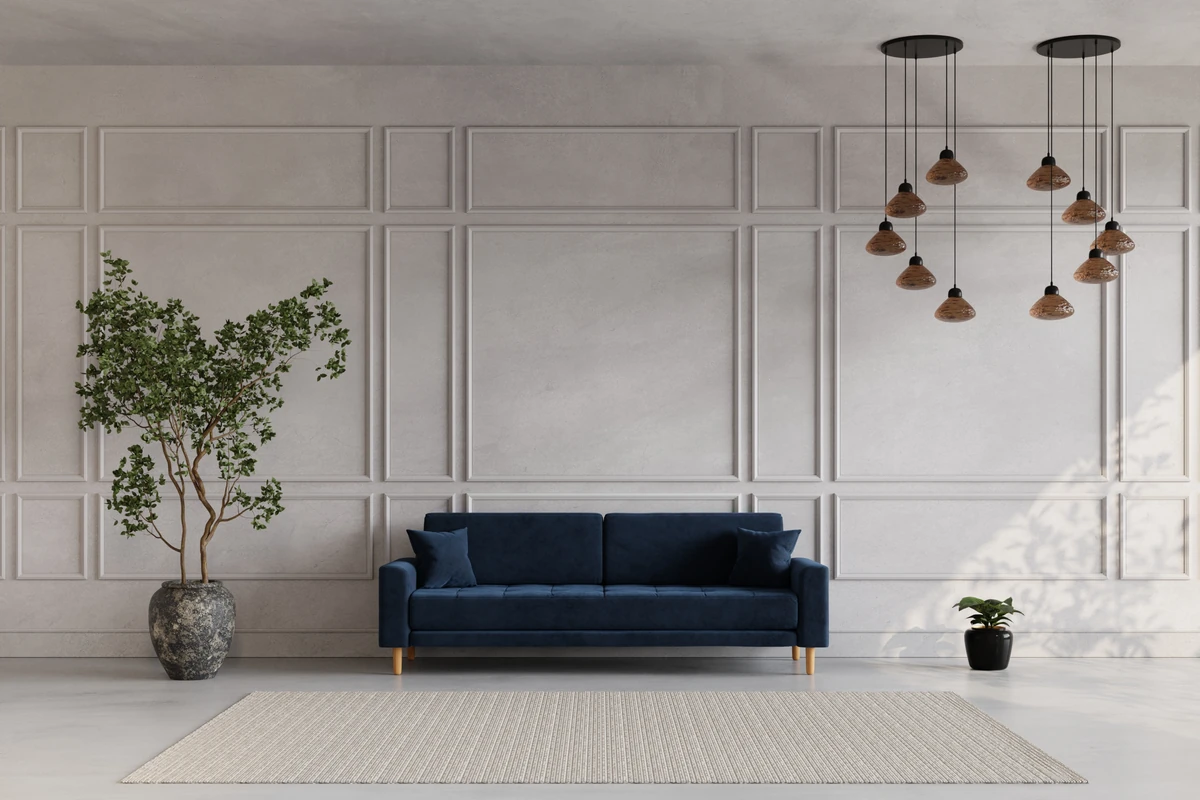
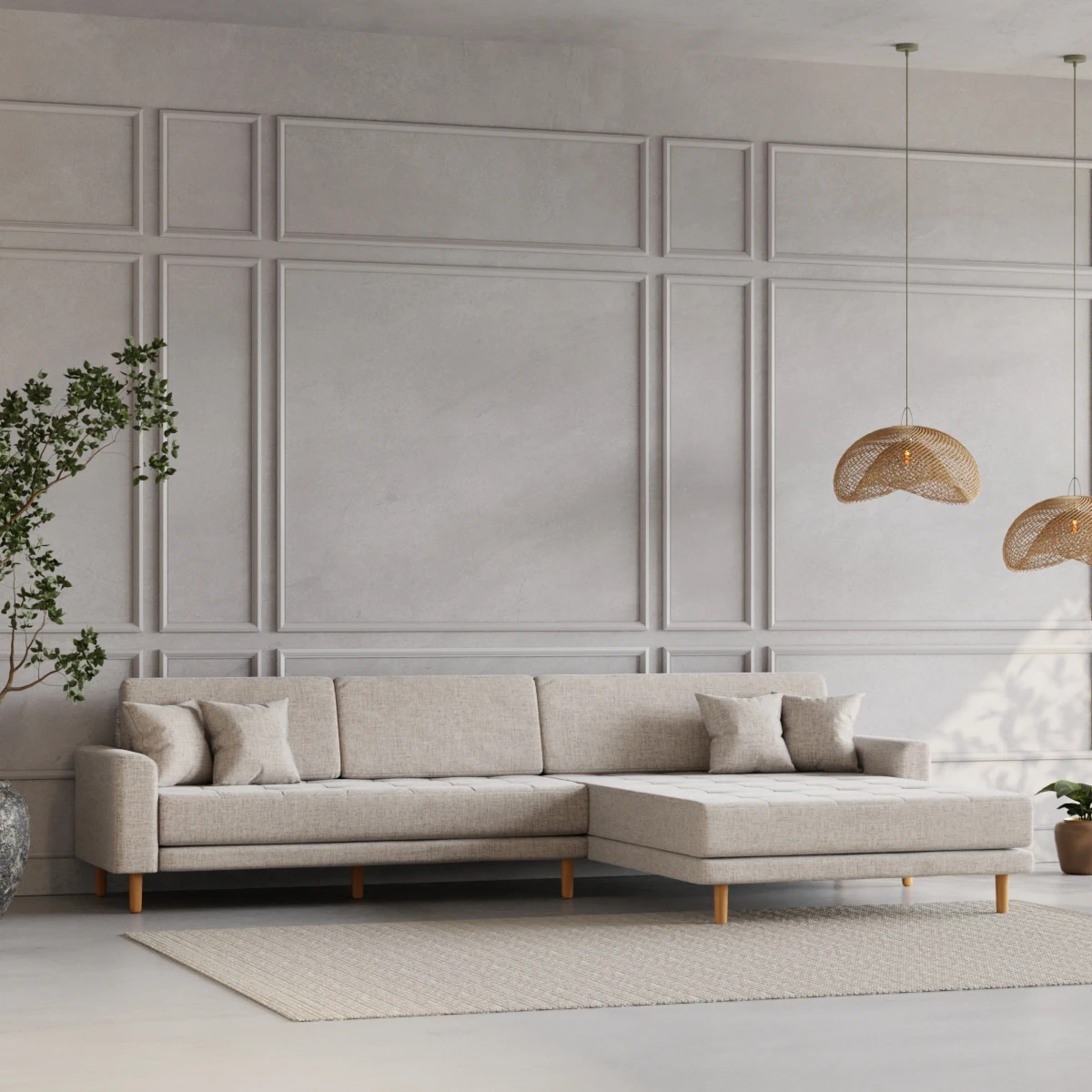
The bit that touches the floor
Legs carry the full weight of the sofa plus everyone on it: a 3-seater plus three adults is 350 kg distributed across four legs. They also decide whether the sofa scratches the floor and whether it survives being dragged across the room twice a year.
The spec sheet that tells you it is worth the money
FSC kiln-dried hardwood frame, HR45 foam, 25,000+ Martindale fabric, solid hardwood legs.
That combination of four specs is the minimum we accept on any sofa we sell. Below that line, the savings on the sticker price are paid back in early replacement. Above it, you are spending money on finish and style rather than longevity.
Browse the full Furnicher sofa collection, with prices from €499 to €2,500 and every material spec on the product page. Start with our complete sofa buying guide if you have not picked a size or style yet, or go deeper on the fabric versus leather question if that is the deciding factor.
For a sofa that defines the room rather than disappears into it, our Japandi living collection pairs walnut frames with linen and natural-pile boucle in proportions that suit smaller European rooms. Most pieces sit between €899 and €1,899.
Frequently asked.
What is the best frame material for a sofa?
Kiln-dried hardwood (beech, oak, ash) with mortise-and-tenon or doweled joinery is the gold standard. It holds shape for 20+ years and survives multiple reupholsteries. Engineered birch ply is a strong second choice and outperforms cheap softwood. Avoid sofas built primarily from MDF, particleboard, or untreated softwood: those frames sag within 5 to 7 years and cannot be reupholstered economically.
What foam density should a sofa cushion be?
Look for HR (high resilience) foam with a density between 35 and 50 kg/m³ for seat cushions on a daily-use sofa. Below 30 kg/m³ is bargain foam and compresses within 18 months. Back cushions can go lighter (25 to 30 kg/m³) since they bear less weight. Feather-wrapped foam cores combine support and softness; pocket-spring cores last longest under heavy use.
What is a good Martindale rub count for sofa fabric?
For domestic daily-use sofas, look for 25,000 Martindale rubs and above. 15,000 to 20,000 is fine for occasional-use sofas in formal rooms. 40,000+ is commercial-grade and what we recommend on family sofas with kids or pets. Performance fabrics from brands like Crypton or Aquaclean typically test at 50,000 to 100,000 rubs and resist stains too.
What is the difference between full-grain, top-grain, and corrected-grain leather?
Full-grain leather is the unaltered top layer of the hide with all the natural markings; it ages best and lasts 25+ years. Top-grain is sanded to remove surface flaws, then printed; lasts 15 to 20 years. Corrected-grain (often called pigmented or finished leather) is heavily sanded and coated with pigment, giving a uniform look but a shorter 8 to 12 year life. Bonded leather is leather scraps glued to a backing and should be avoided entirely.
Are wooden sofa legs better than metal?
Both work if specified correctly. Solid hardwood legs in oak, beech, or walnut (Janka hardness 1000+) are stable, repairable, and floor-friendly. Powder-coated steel or brushed metal legs carry more weight per cm² and suit heavier modular sofas above 120 kg. Avoid plastic-cap legs on anything over 80 kg total weight: the cap splits at the screw point within 2 to 3 years of regular use.
What sofa fabric is best for pets and children?
Performance fabrics (Crypton, Aquaclean, Sunbrella) with a Martindale count of 40,000+ and a stain-release treatment are the most practical. Tight-weave microfibre is the budget alternative: it hides hair, wipes clean, and takes 50,000 rubs without pilling. Avoid loose-weave boucle, untreated linen, and velvet with a high cut pile: all three trap fur and mark easily under claws. See our tips for buying a sofa for the full pet-and-kid checklist.
