 9800+ TRUSTPILOT REVIEWS


 EN
EN DE
DE FR
FR NL
NL
Fabric or leather is the kind of decision people circle around for weeks and often get wrong, because they ask the wrong question. The right question is not which material looks better. The right question is which one you still want to own in ten years, given your dogs, your kids, your south-facing living room, and who actually sits on it after dinner.
This guide compares the two on durability, day-to-day maintenance, pet and child suitability, climate behaviour in temperate European homes, and the total cost over fifteen years. No marketing flourishes, just concrete numbers and the situations where each material genuinely wins.
How long each material actually lasts
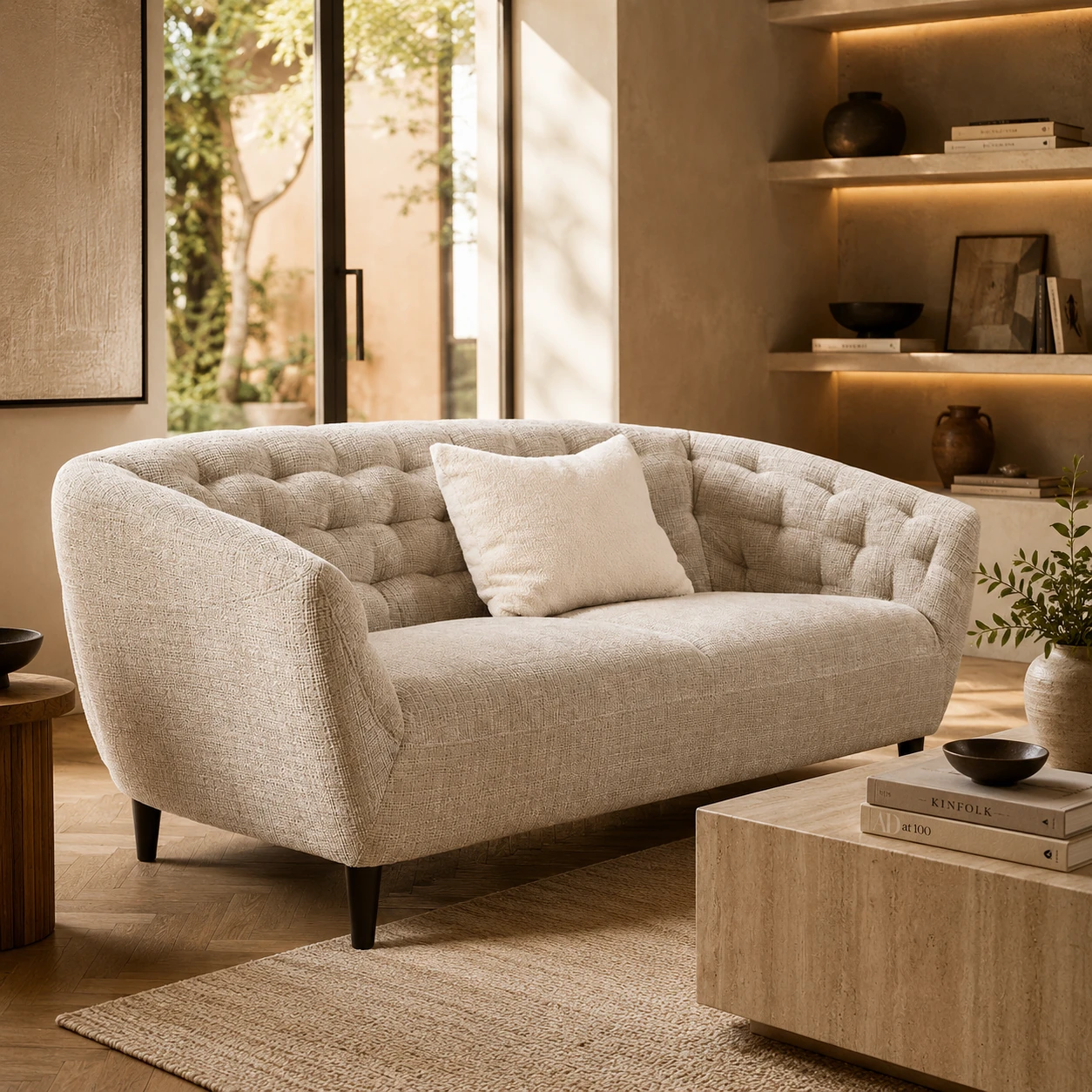
Durability is the biggest factor in the decision, and the least honestly communicated. A full-grain leather sofa carries normal household use for fifteen to twenty years before the cover looks worn. The leather softens, develops patina, and holds its structure. Stains do not sink in, seams do not give, and the silhouette barely changes.
Performance fabric, the kind built around nylon blends or microfibre, lasts eight to twelve years under daily use. Plain untreated cotton or linen wears visibly within five to seven years: pilling on the arms, smoothed patches on the seat cushions, dull creasing on the back.
- Full-grain leather: 15 to 20 years, develops patina
- Performance fabric: 8 to 12 years under daily use
- Plain cotton or linen: 5 to 7 years before visible wear
- Bonded or split leather: 3 to 5 years, cracks or peels after
Pets, kids, and what each material actually does
For most European households this category decides the choice, not the look. Here is what each material does in practice on a Tuesday evening with everything happening at once.
Leather with dogs or cats
Full-grain leather will pick up claw marks, no avoiding it. The unexpected part: those marks become part of the patina that gives leather character after a few years. Hair does not cling, it brushes off in a single pass.
For cats with sharp claws that actively scratch the side panels, leather remains a gamble. A printed coating on split leather will tear where full-grain only scratches.
Fabric with kids
Microfibre is the underrated winner in this category. Yoghurt, water-based felt-tip, sticky fingerprints, most of it wipes off with a damp cloth before it has time to sink in.
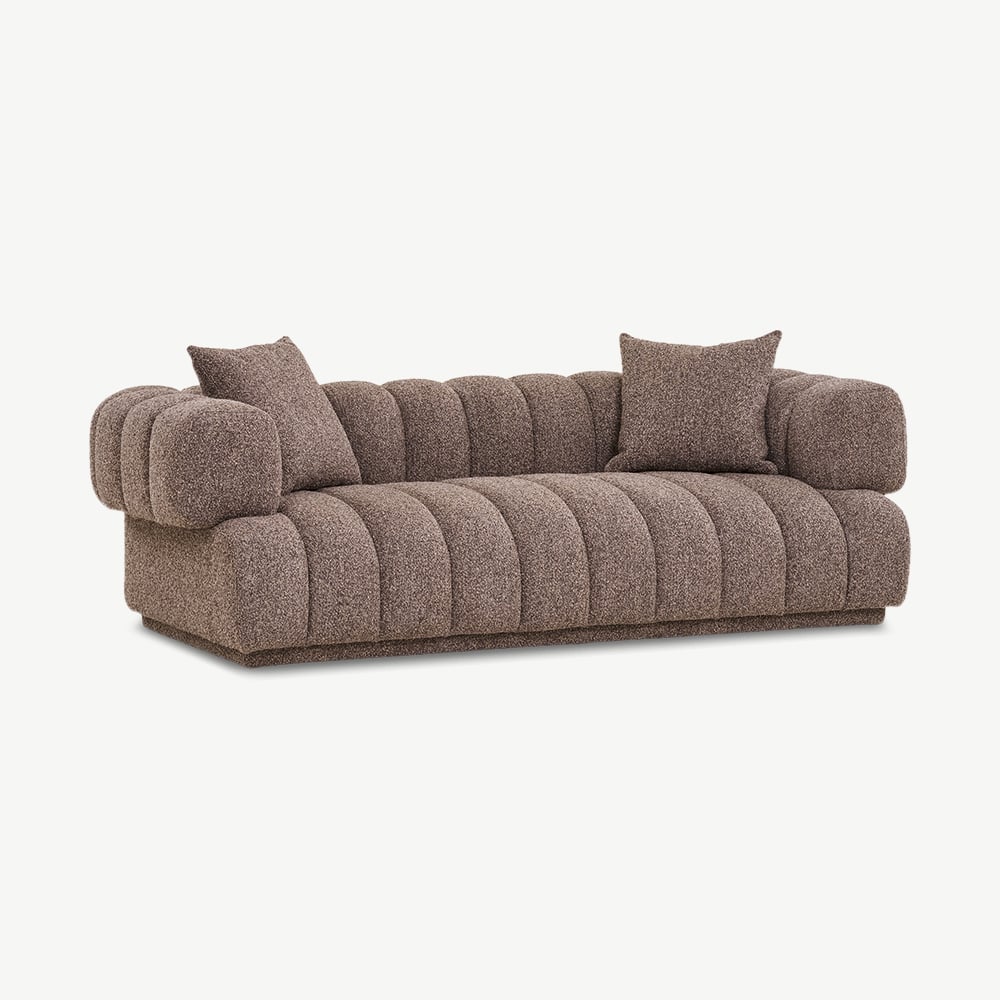
Boucle photographs beautifully and catches every crumb, every dog hair, every fuzz from a wool sock. Velvet shows the smallest mark across the pile. For families with young children, removable washable covers at 30 degrees are the difference between affection and frustration.
What the material gives away
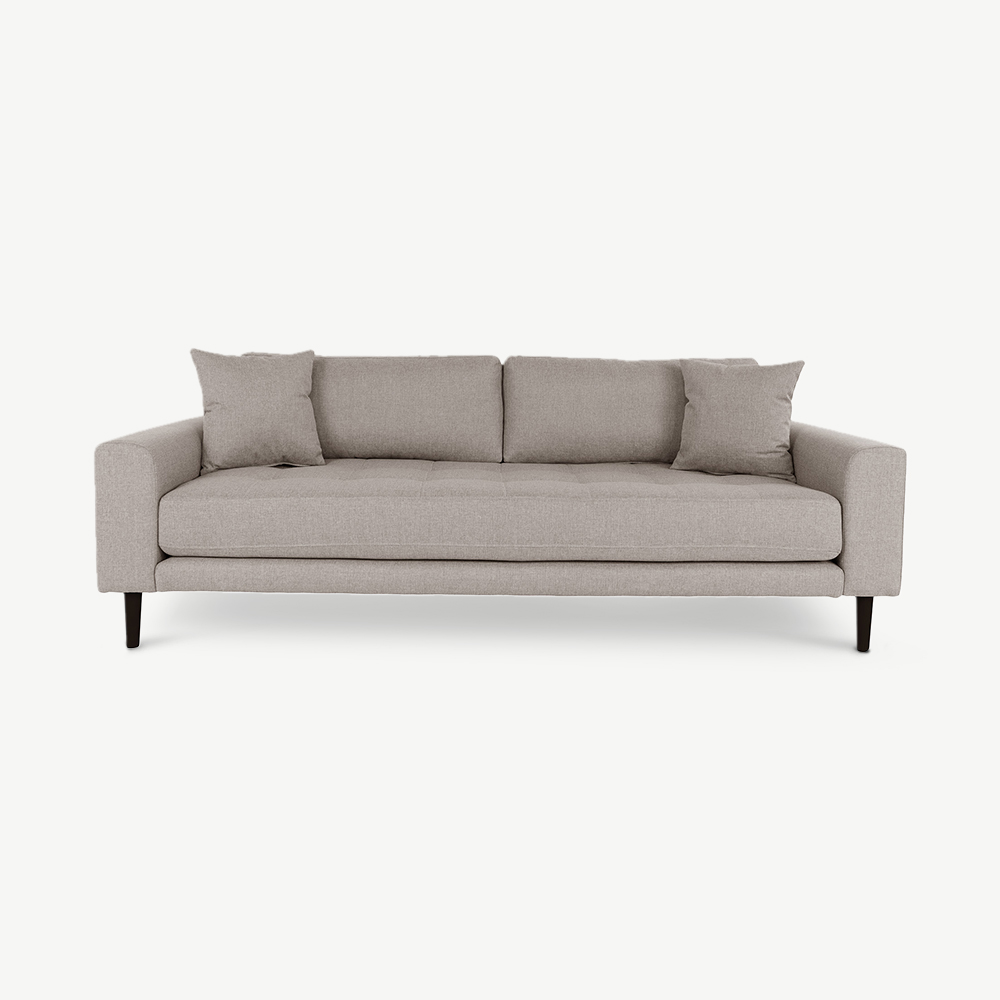
Light colours show every mark regardless of material. Dark leather hides spills until you lean over and look. Mid-tone fabrics in grey-brown, sand, or stone forgive the most under daily use.
Velvet and boucle behave very differently under warm artificial light than under daylight. Order swatches, leave them in your living room for three days, look again. No showroom can sell you that comparison.
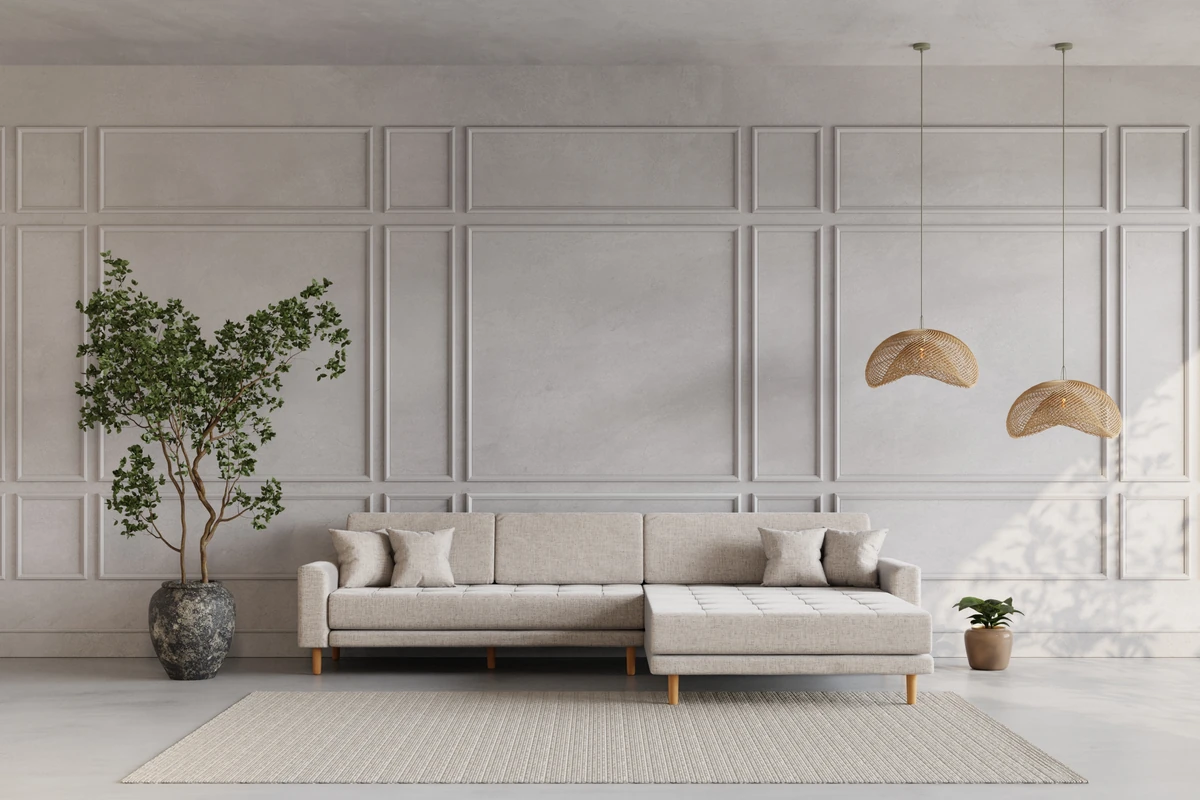
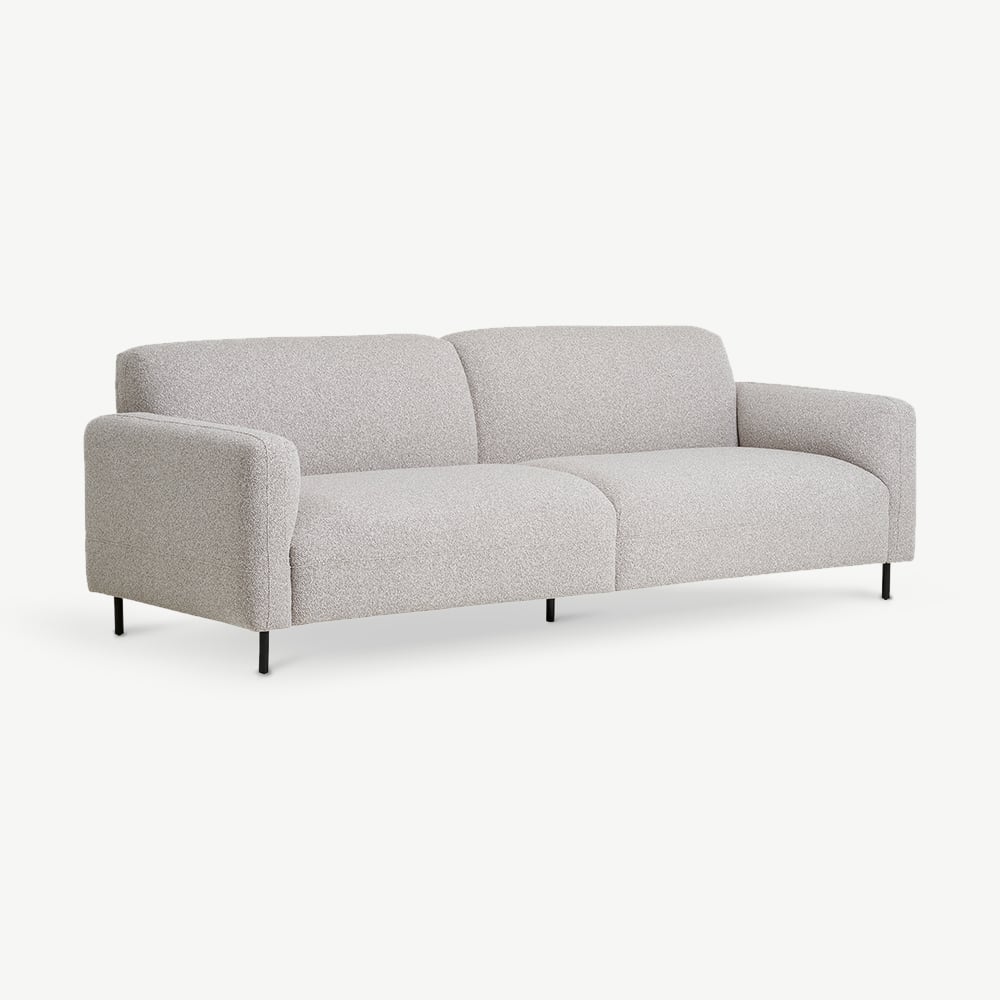
Featured in this guide


What the European climate actually does
The European living room sits at 18 to 21 degrees for most of the year, then climbs to 28 degrees during a few weeks of summer. Leather feels cool to the touch in January until you have been sitting on it for five minutes. In July it can stick to bare skin. Fabric stays at room temperature year-round and breathes, which makes it more comfortable for most people in most months.
Care cost is the second underestimated line item. Over fifteen years the totals look like this:
| Material | Purchase | Care over 15 yrs | Total |
|---|---|---|---|
| Full-grain leather | €1,800 to 2,500 | €120 (conditioner) | €1,920 to 2,620 |
| Performance fabric, fixed cover | €900 to 1,400 | €450 (3x deep clean) | €1,350 to 1,850 |
| Fabric, removable cover | €800 to 1,300 | €0 to 200 | €800 to 1,500 |
| Bonded leather (avoid) | €499 to 800 | + replacement at year 4 | €1,500 to 2,400 |
Per year that puts full-grain leather at around €130. A good fabric sofa with removable covers lands at around €80. Bonded leather is always the most expensive choice, because you buy it twice.
What each material asks of you
No material is maintenance-free. The kind of work differs, and some people genuinely prefer one routine over the other.
When each material wins
Fabric for most families. Leather if you want the same sofa for twenty years and your household is past the yoghurt-on-everything phase.
Dogs or cats, planning to keep the sofa for two decades: full-grain leather is the logical choice, on the understanding that scratches become patina. Young children, no appetite for monthly stain panic: pick a performance fabric with removable washable covers. For a typical 16 to 22 m² living room a 220 cm three-seater sits comfortably inside €800 to €1,500 in fabric, or €1,500 to €2,500 in good leather.
Browse our full sofa collection with filters for material, colour, and seat count. For the broader context, our sofa buying guide covers frames, sizing, and delivery logistics. If style is the next question, our Scandinavian furniture guide works well with either material.
Frequently asked.
Which lasts longer, fabric or leather?
Full-grain leather lasts 15 to 20 years with normal household use. Performance fabric (nylon blends, microfibre) lasts 8 to 12 years. Plain untreated cotton or linen wears visibly within 5 to 7 years. Bonded and split leather often crack within 3 to 5 years and we do not recommend them for a main seating position.
Is leather good with pets?
Full-grain leather scratches visibly from claws, but those scratches become the patina many owners prefer over the years. Hair does not cling to it. For cats with sharp claws that actively scratch, microfibre is usually safer: it tears less easily and hair brushes off cleanly. Boucle and velvet show pet hair very visibly and are best avoided in homes with shedding animals.
Does leather feel cold in winter?
Yes. Leather feels cool to the touch in an unheated room in January until you have sat on it for a few minutes. In summer it can stick to bare skin. Fabric stays at the room temperature year-round and breathes, which makes it more comfortable for most European climates outside of the warmest weeks.
What is the difference between full-grain and split leather?
Full-grain is the top layer of the hide with the natural grain structure intact. It is stronger, breathes, and develops patina. Split leather is the lower layer with a printed polyurethane coating that mimics the look of leather. It is thinner, tears more easily, and cracks or peels within 3 to 5 years. Bonded leather (glued leather scraps with a coating) is weaker still and best avoided for the main seating position.
Can a fabric sofa go in the washing machine?
Only if the covers are removable (look for a zip under the cushions). Wash at 30 degrees cold and line-dry instead of tumble drying. Fixed-cover sofas cannot be machine washed: vacuum weekly, blot spills immediately, and book a professional clean every 2 to 3 years for 80 to 150 euros for a three-seater.
Is leather a good choice for allergy sufferers?
Yes. Leather holds no dust mites and traps no household dust in fibres, because there are no fibres. For people with dust-mite allergies that is the main practical advantage. Fabric sofas with removable covers that can be washed at 60 degrees are a reasonable second option, but most covers require 30 degrees to avoid shrinkage.
