 9800+ TRUSTPILOT REVIEWS


 EN
EN DE
DE FR
FR NL
NL
Choosing a sofa is a 1,000 EUR purchase you live with for a decade. Most mistakes happen before a single model is opened in a browser tab: the room is too small for the size you want, the staircase will not take the box, the foam at 25 kg/m3 collapses in two years. A seven-step method avoids all of it.
This guide follows the order an experienced buyer actually uses: measure the room, check the delivery path, choose the configuration, judge the frame, the fill, the fabric, then set the budget. Each step ends with a concrete checklist.
Measure the room, then the delivery path
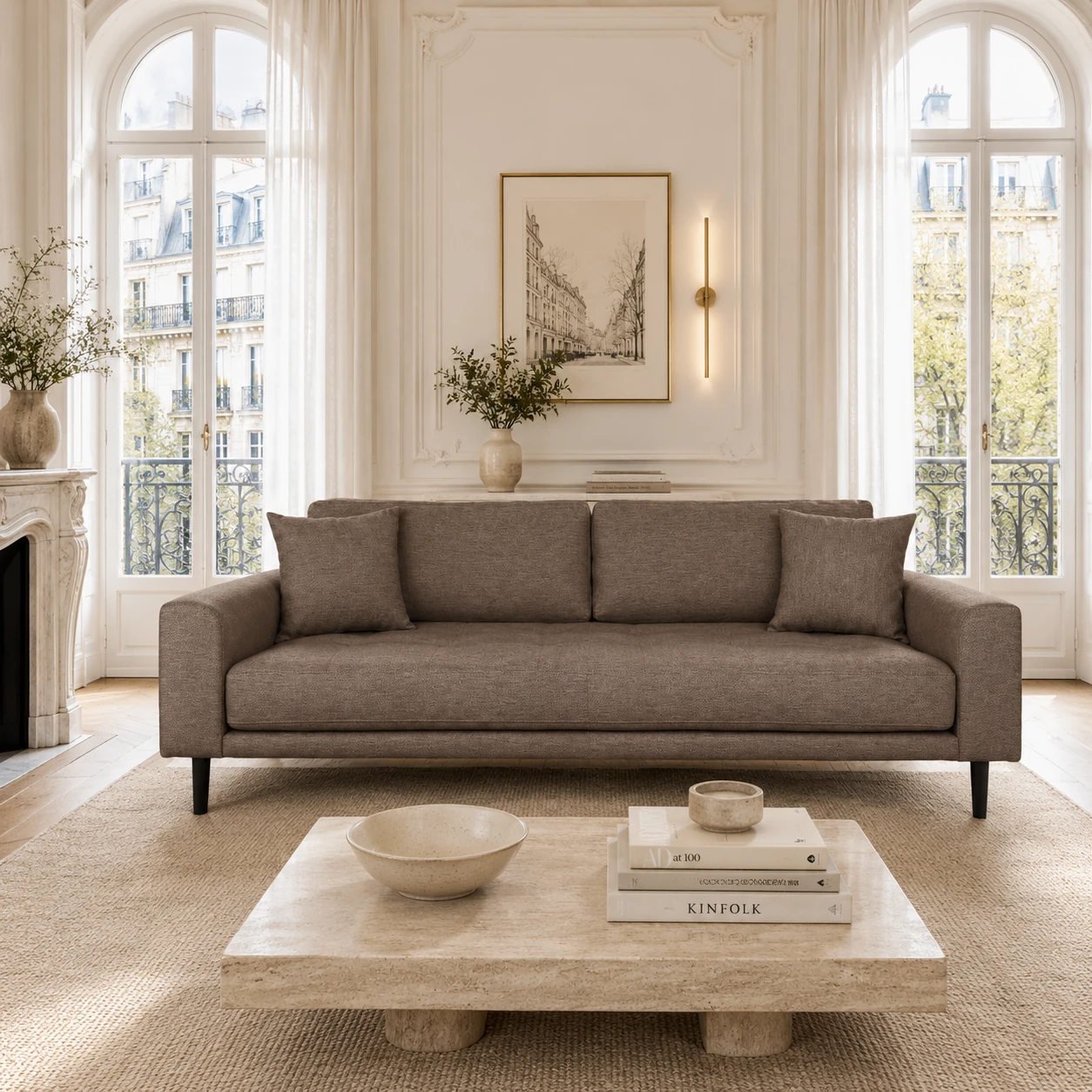
Before opening a single model online, get the tape out. The classic European proportion rule: a sofa takes up between 50 and 65 percent of the main wall length. In a 4 metre living room, that means a sofa of 200 to 260 cm wide. Below that, the room feels empty. Above it, the room feels crowded.
Mark the footprint on the floor with masking tape before buying. You will see immediately whether the coffee table remains reachable (leave 40 cm between sofa and table) and whether the walk-through to the kitchen or hallway stays clear (80 cm minimum).
- Wall length: measure the wall the sofa will sit against, subtract 30 to 50 cm on each side
- Depth: a sofa is 90 to 105 cm deep, allow space to actually sit on it
- Front door diagonal: measure width and height, add 5 cm for packaging
- Stairwell: width of the landing and the turning radius, this is where 80 percent of deliveries get stuck
- Lift: interior depth and door height, photograph the rating plate
Pick the configuration
The format decides everything that follows: circulation around the sofa, who can sit on it, how easily it travels to your next flat. Three families cover 90 percent of decisions.
Straight 2 or 3-seater
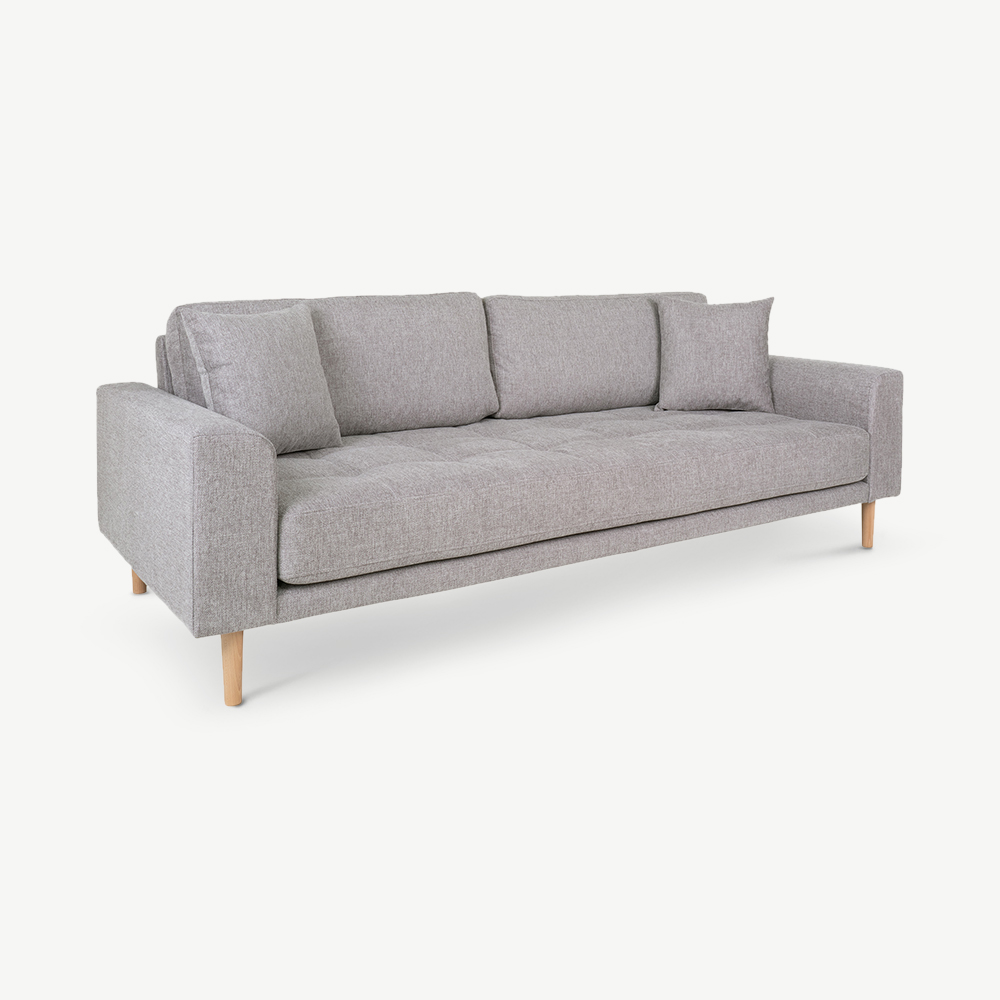
The flexible format. A 2-seater (160 to 185 cm) fits a couple or studio. A 3-seater (200 to 230 cm) seats two adults plus a child or visitor, without overwhelming the room.
Strengths: fits anywhere, resells well, slots into any floor plan. See our 2 vs 3-seater guide for the decision in detail.
Corner sofa
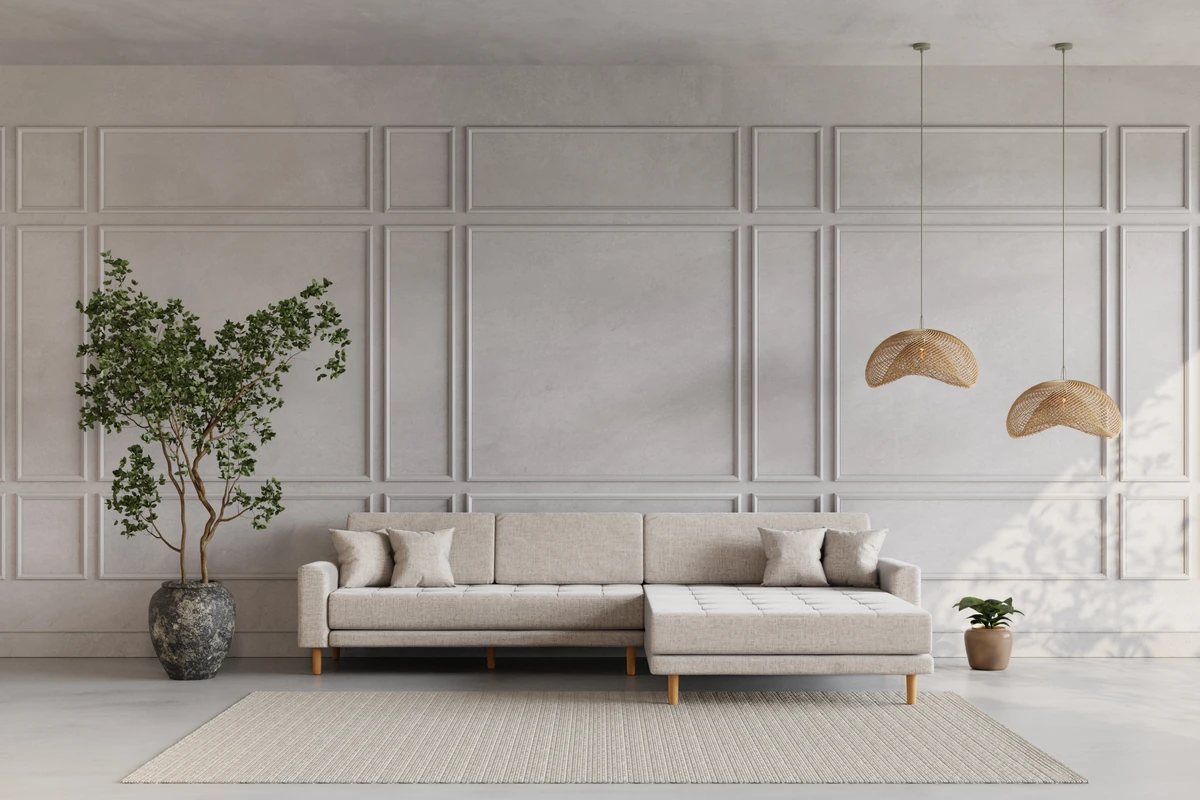
The family option. The return (chaise) adds 80 to 100 cm of depth and seats 4 to 5 people comfortably. Choose the return side based on the room layout; many models are reversible.
Watch the stairwell: some corners do not break down. Our corner sofa guide lists the classic delivery traps.
Modular sofa
Independent pieces (single seat, left or right armrest, ottoman, chaise) that reconfigure over time. Ideal for awkward rooms or frequent movers: a 3-module straight sofa becomes a corner two years later by adding a chaise.
Cost: 10 to 20 percent more than the equivalent fixed sofa, justified by the flexibility.
Featured in this guide

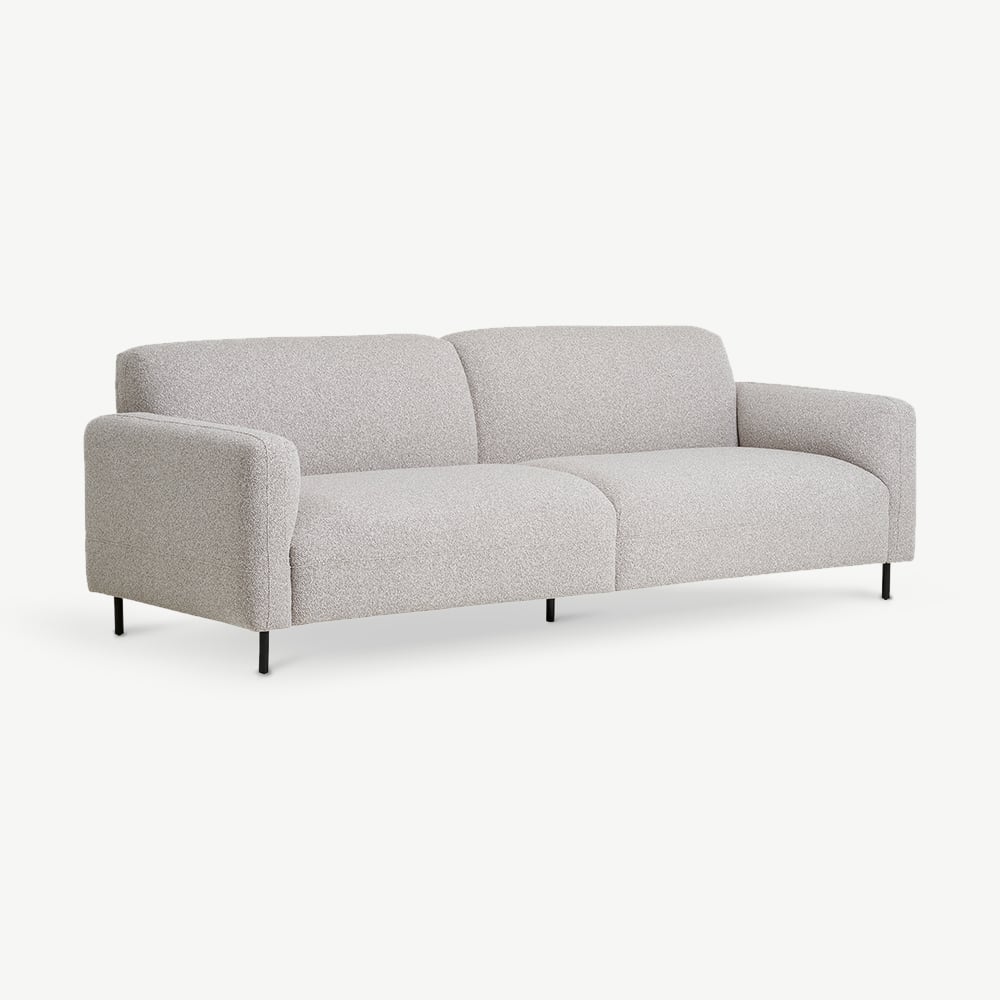
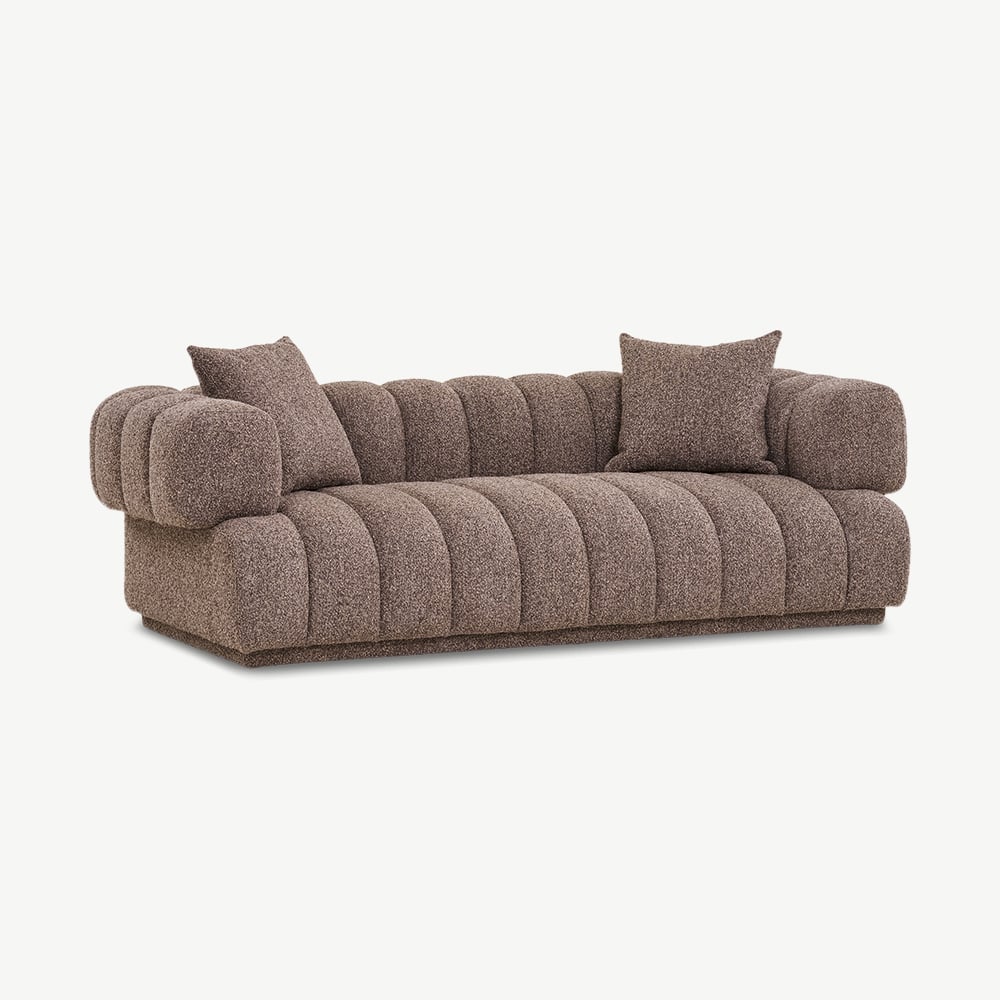

What happens beneath the upholstery
Sofa durability comes down to two things you cannot see: the frame (step 4) and the fill (step 5). Neither shows up in product photos, both should be on the spec sheet. If they are not, that is already an answer.
| Component | What to look for | What to avoid |
|---|---|---|
| Frame | Solid beech, ash, or pine | Thin plywood, MDF |
| Joinery | Mortise-and-tenon, dowels | Staples, glue alone |
| Seat support | Jute webbing or no-sag springs | Thin elastic webbing |
| Seat foam | HR 35 to 40 kg/m3 | Standard foam 22 to 28 kg/m3 |
| Back cushion | Feather, siliconised fibre or HR | Loose unbagged polyester |
HR 35 kg/m3 is the threshold for daily use over 8 to 12 years without obvious sagging. At 40 kg/m3, expect 12 to 18 years. Below 30, the sofa becomes uncomfortable in 2 to 3 years regardless of what you paid.
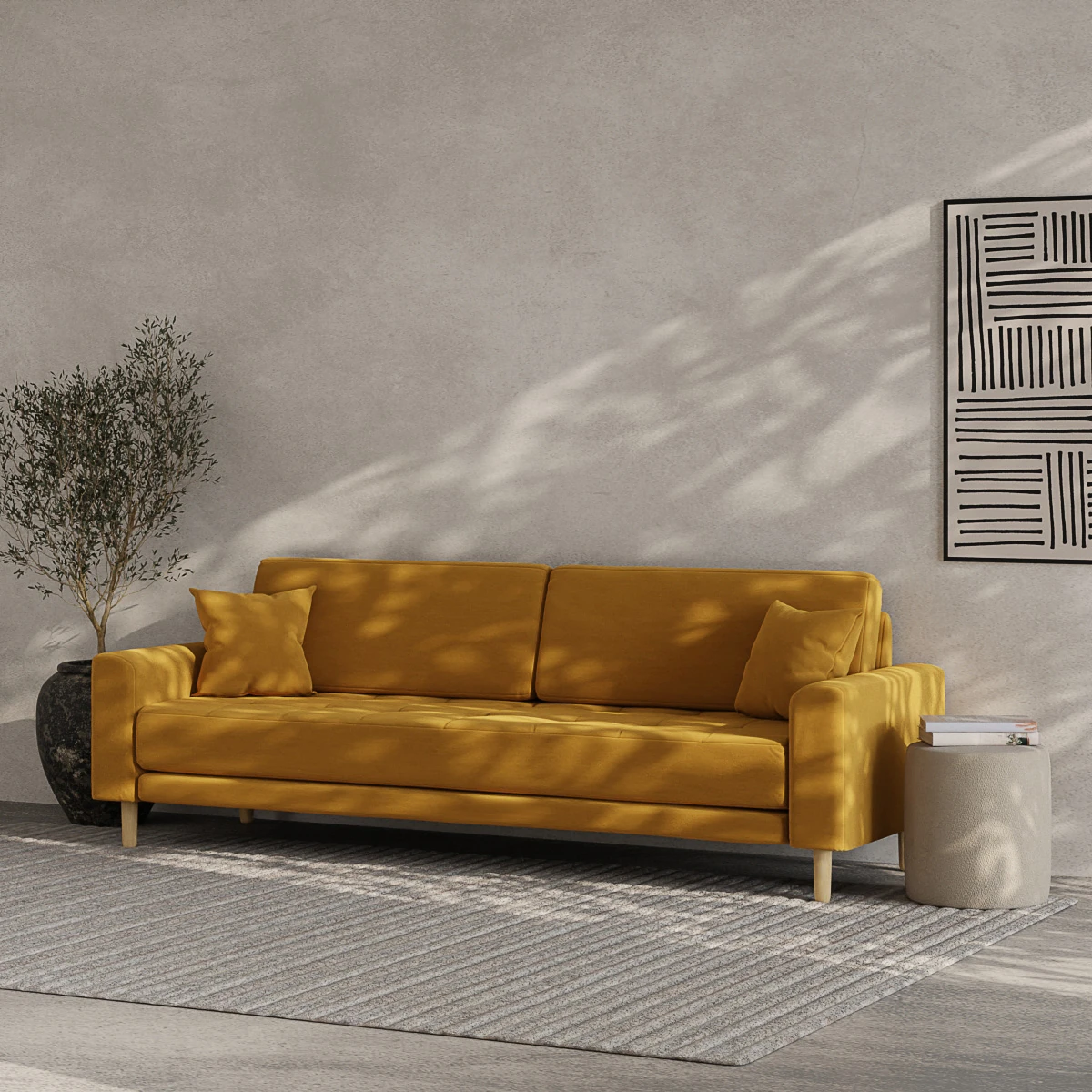
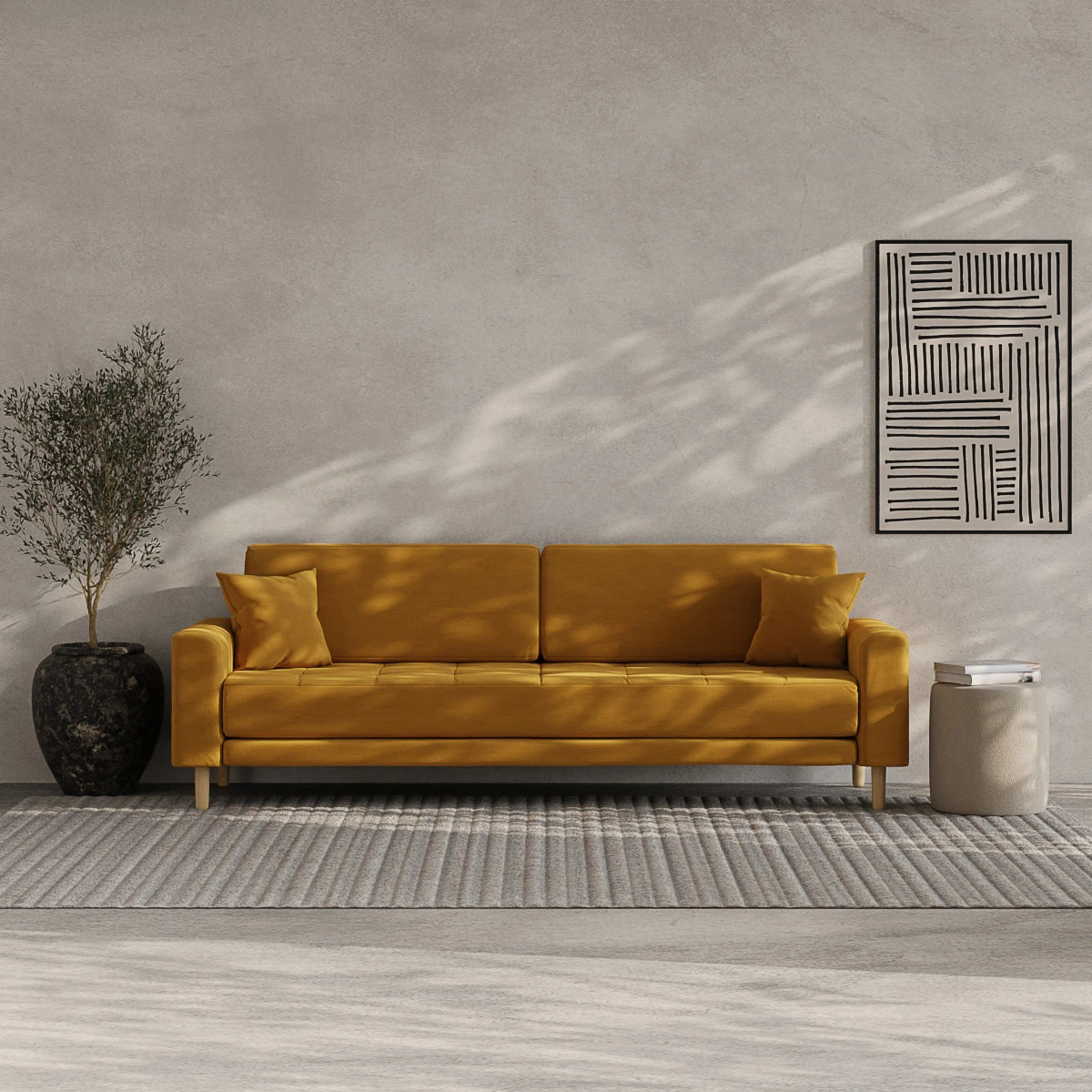
Fabric and budget: the final call
The last two steps decide together because each shifts the other. Here is the order to work through them.
The right sofa is the one that clears all seven steps
Room measurements, delivery path, configuration, solid wood frame, HR 35+ foam, fabric at Martindale 25,000+, budget priced per year of use.
Our range covers 499 to 2,500 EUR depending on configuration, from a boucle 2-seater to a modular full-grain leather corner sofa. Every spec sheet shows foam density, wood species, and Martindale rating, no small print buried elsewhere.
Browse our sofa collection filterable by size and configuration, or go deeper with the full sofa buying guide. For style coherence with the rest of the room, our Japandi interior guide pairs sofas with coffee tables and rugs that work in rooms under 25 m2.
Frequently asked.
What width sofa fits a 20 m2 living room?
Plan for 200 to 230 cm of width for a 3-seater in a 20 m2 living room. Leave at least 80 cm in front for circulation and the coffee table, and 40 cm on each side to breathe. A 240 cm corner sofa also works if the return rests against a free wall. For smaller rooms (12 to 16 m2), stay with a 2-seater of 160 to 180 cm.
How do I know if a sofa will fit through the door?
Measure the diagonal of your door (width and height), the stairwell, and the landing. Compare against the depth of the packaged sofa, usually 5 to 10 cm more than the finished product. For a 220 cm 3-seater, you need an entry door of at least 85 cm and a landing of 200 cm. When in doubt, choose a model with removable legs or a modular sofa delivered in separate pieces.
What is the best frame for a sofa that lasts?
A solid wood frame (beech, ash, or pine) with mortise-and-tenon joints and dowels lasts 15 to 25 years. Avoid thin plywood or particleboard on models under 800 EUR; they warp within 4 to 7 years under daily use. Jute webbing or pocket springs (no-sag) under the seat are the second indicator of longevity, both worth checking on the spec sheet.
What foam density should the seat have?
For daily use, aim for high-resilience (HR) foam at 35 kg/m3 minimum, ideally 40 kg/m3. Below 30 kg/m3 the seat collapses within 2 to 3 years. Density appears on the spec sheet as HR35, HR40 or D35, D40. Feather seat cushions usually wrap an HR foam core, the most durable comfort setup, with occasional plumping.
Fabric or leather, which is the better choice?
Full-grain leather lasts 20 to 30 years and patinas with time, but costs 50 to 100 percent more and is vulnerable to pet claws. Fabric lasts 10 to 18 years depending on quality, often has removable covers, and offers more colour options. With children or pets, choose a performance fabric (Martindale 40,000+) with removable covers. Without them, leather remains the most durable option, provided you avoid bonded leather.
What is the budget for a sofa that lasts?
Between 800 and 1,800 EUR for a 3-seater in good fabric, solid wood frame, and HR35 foam. Above 1,800 EUR you are paying for leather, finishing details, or a premium retailer. Below 600 EUR, expect to replace the sofa within 5 to 7 years. Our range sits between 499 and 2,500 EUR depending on configuration and upholstery.
