 9800+ TRUSTPILOT REVIEWS


 EN
EN DE
DE FR
FR NL
NL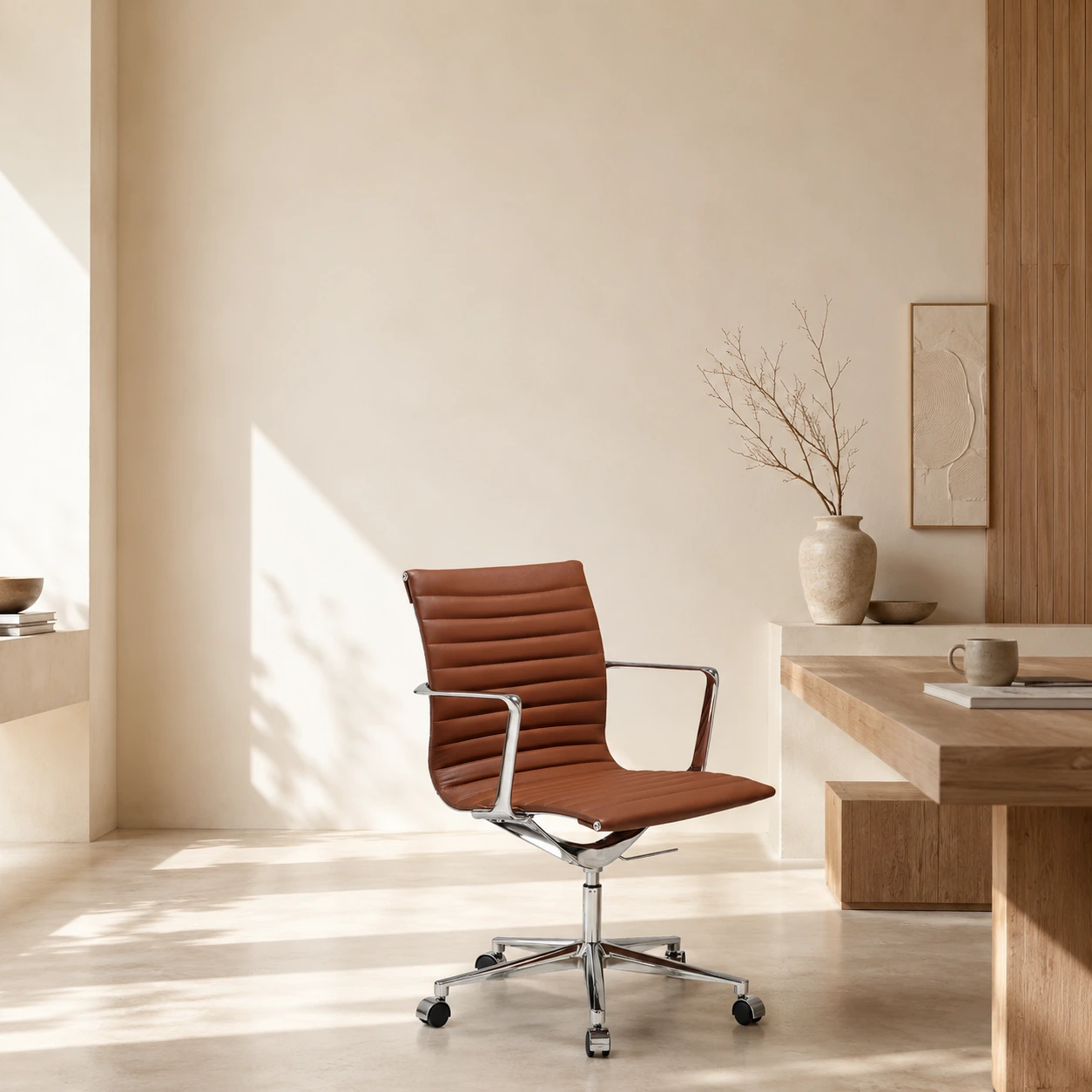
A leather office chair is a commitment. The material ages visibly, every scratch stays, the colour shifts over the years. For some people that is the point. For others it is the reason to choose mesh or fabric instead. Both reactions are valid, depending on how you work and where the chair sits.
This guide covers what actually matters in a leather desk chair: the three grades sold in Europe and how long each lasts, how real and faux leather behave through a centrally heated winter and a 30 °C summer, which standards the chair should meet, and the price point at which full-grain pays off against good PU.
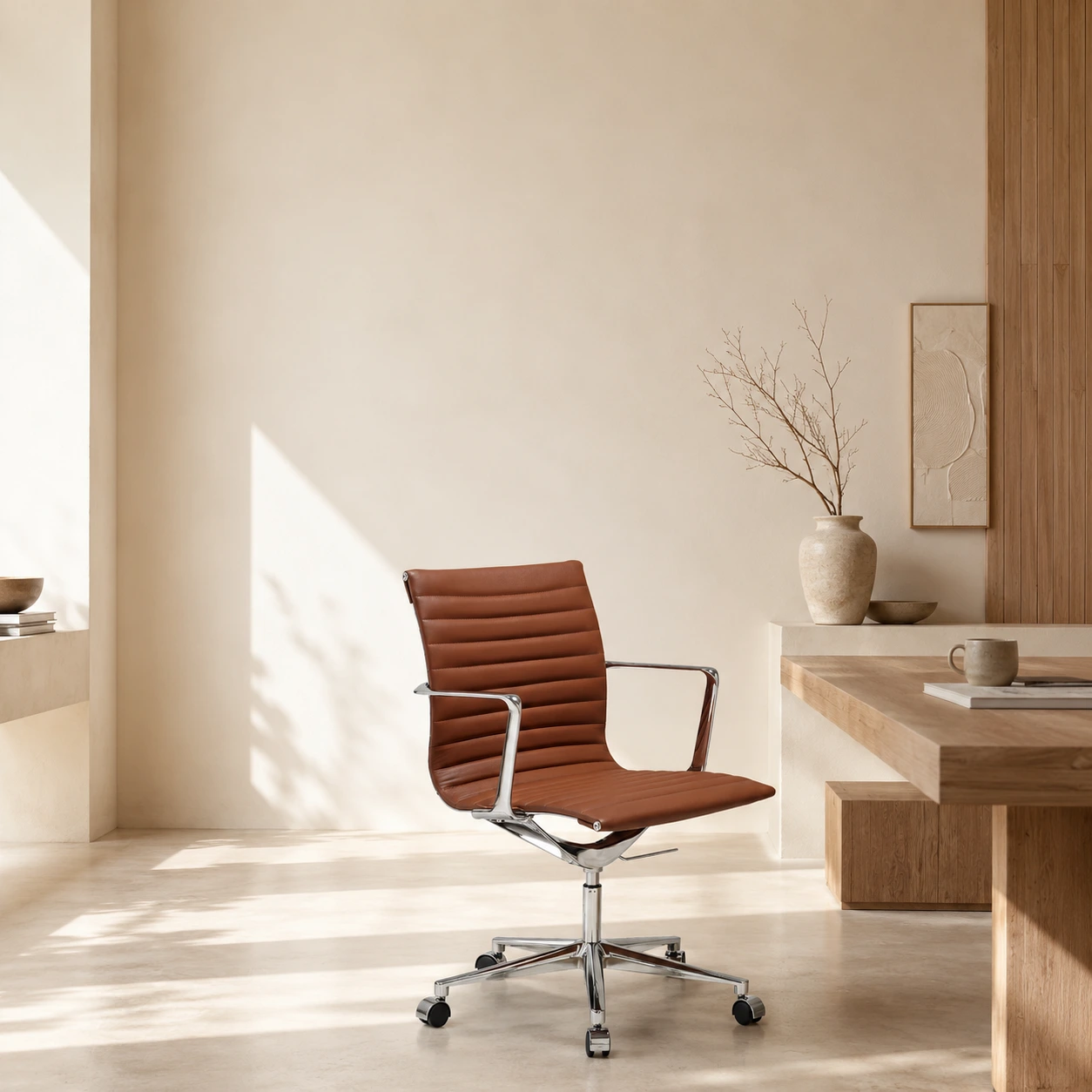
Three grades, three lifespans
Retailers use three terms loosely. They look similar on a product page and behave very differently after two winters of daily use. Before you commit, know which one you are buying.
- Full-grain leather: the top layer of the hide, unsanded, with all the natural grain. Breathable, develops patina, holds 15 to 25 years of daily desk use. €499 to €799.
- Corrected-grain leather: sanded and embossed for a uniform look. More scratch-resistant, less breathable, 10 to 15 years lifespan. €299 to €549.
- PU faux leather: polyurethane coating on a fabric backing. Looks like leather in year one, typically cracks at the seat edge from year 5 to 7. €199 to €349.
When leather is the right call
Leather is not a universal upholstery. It solves specific problems and creates new ones. Here is the honest version of when it fits.
Formal office work
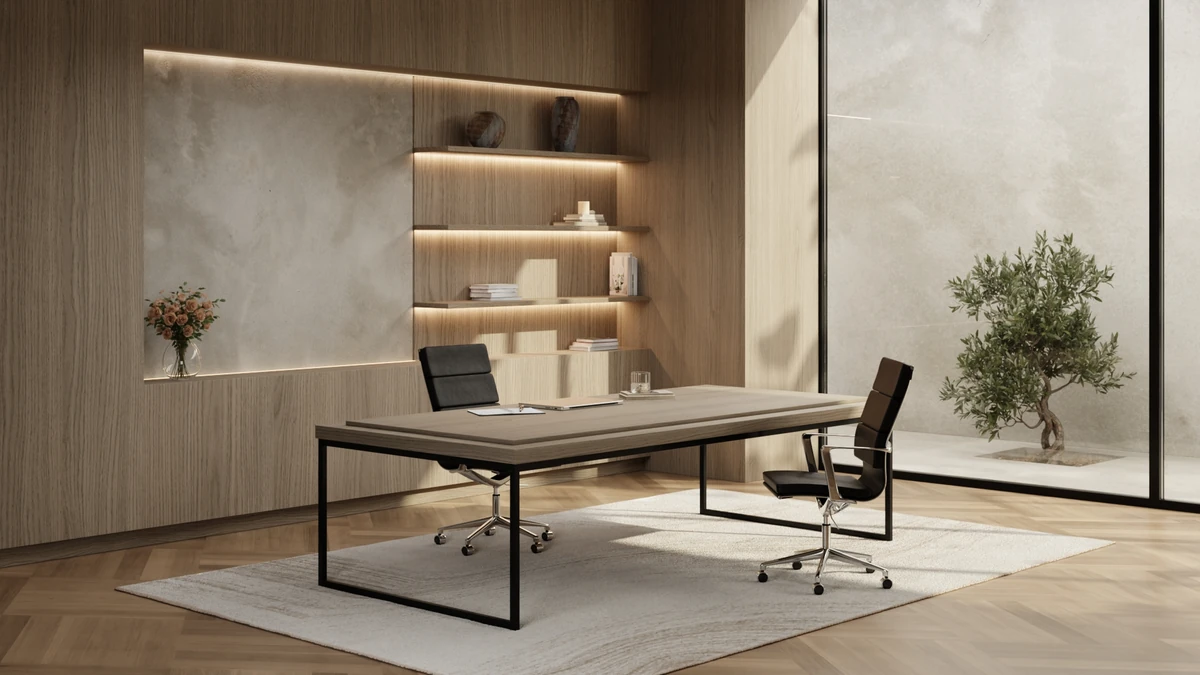
In law firms, advisory practices, executive offices, leather is shorthand for reliability. Full-grain in black or cognac ages well alongside a solid oak or walnut desk, and the impression holds for clients who walk in.
Compare against fabric and mesh in our full office chair collection.
Eight-hour workdays
Good full-grain conforms slightly to your sit-bones after 4 to 6 weeks, which improves pressure distribution. Over an 8-hour workday, you can feel the difference versus stiff fabric that gives almost nothing over the years.
Caveat: the room needs to stay below 26 °C. Above that, the comfort flips.
Where leather fails
Damp rooms (basements, older buildings without cross-ventilation) cause leather to mould at the stitching over the years. Vegan households rule it out by definition. A well-finished beige fabric office chair is the more honest answer for both.
Featured in this guide
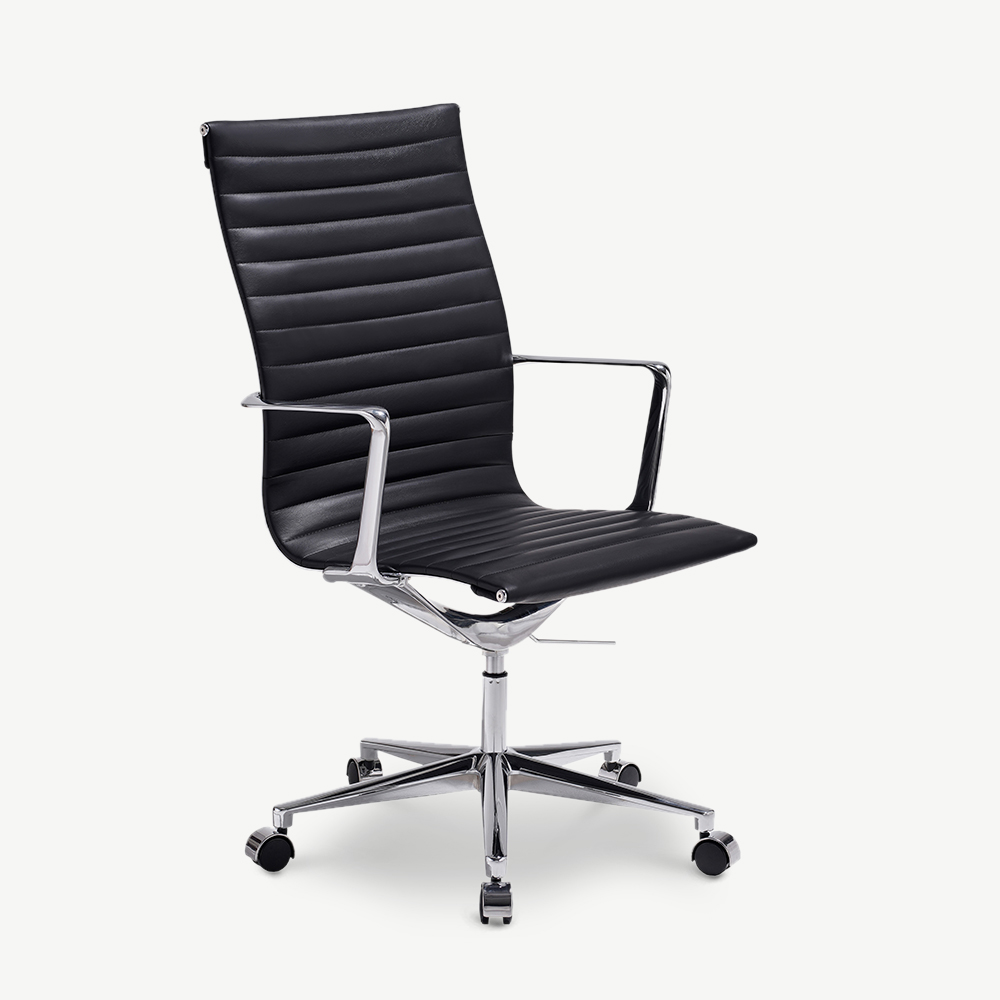
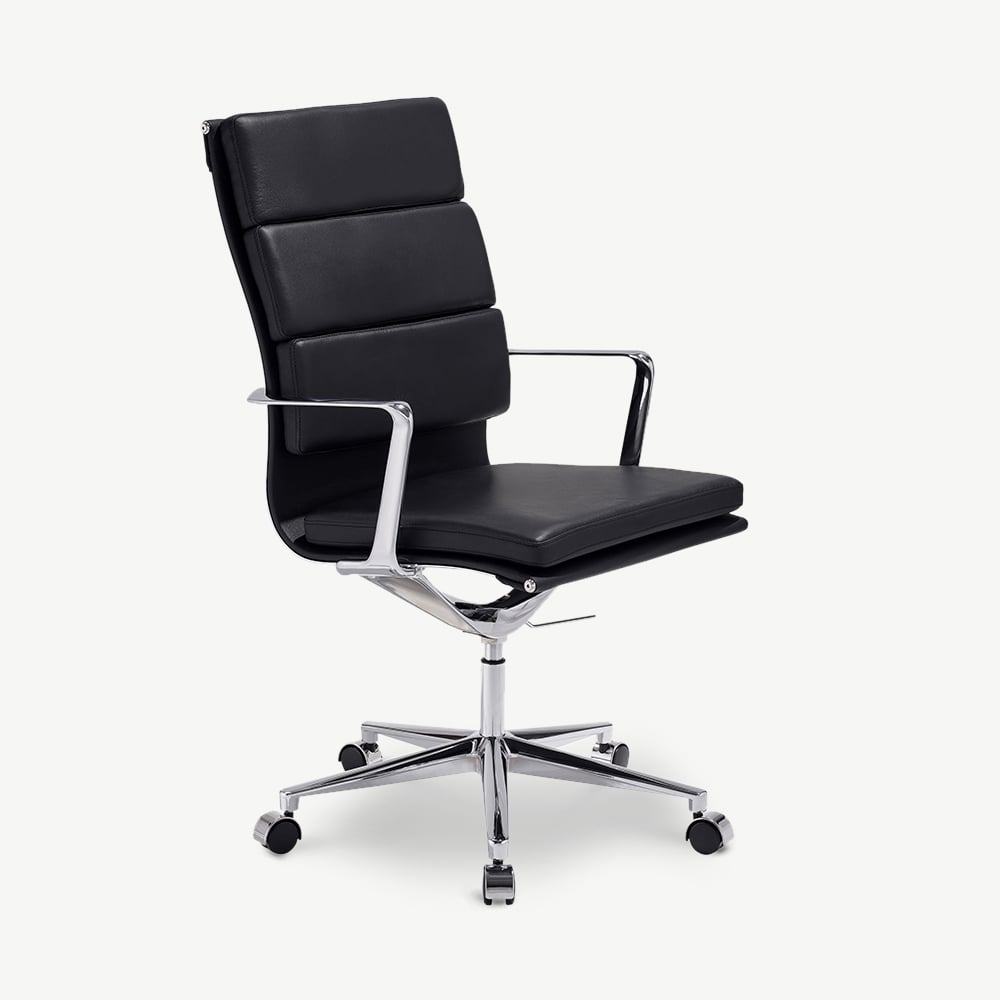
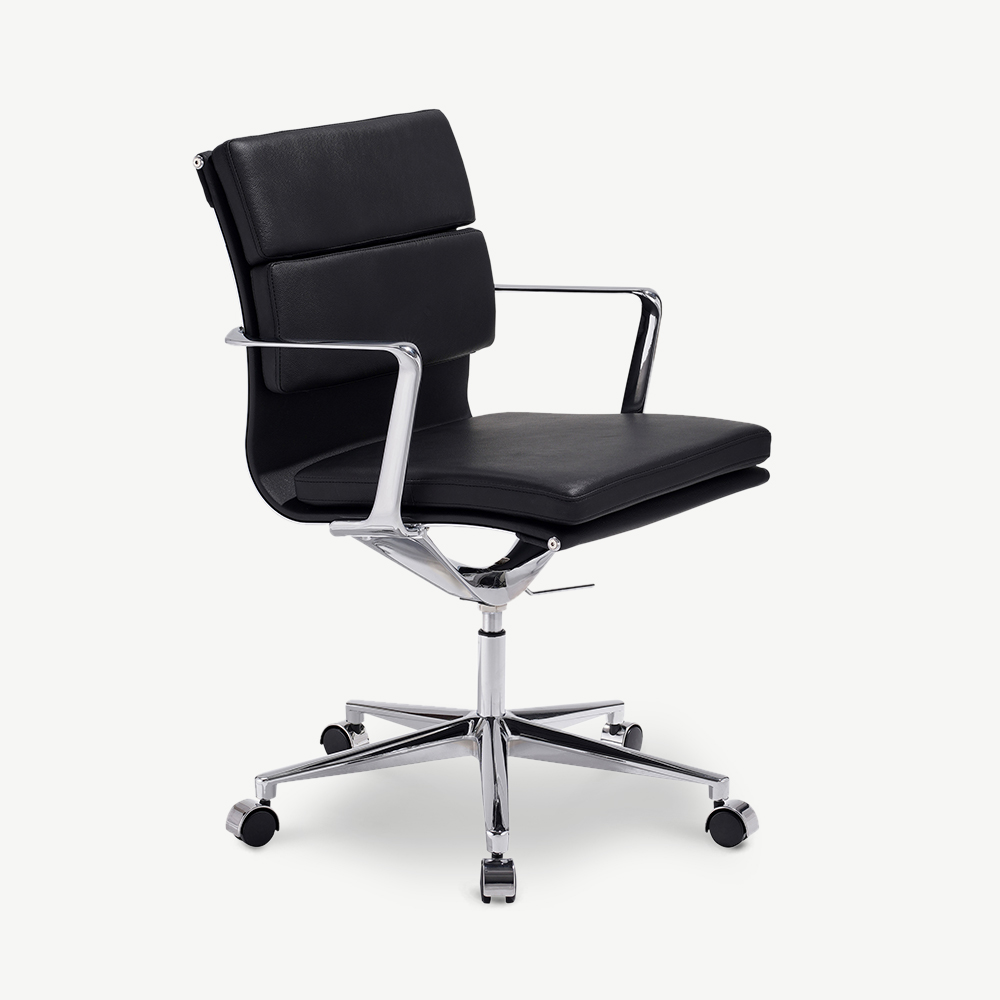
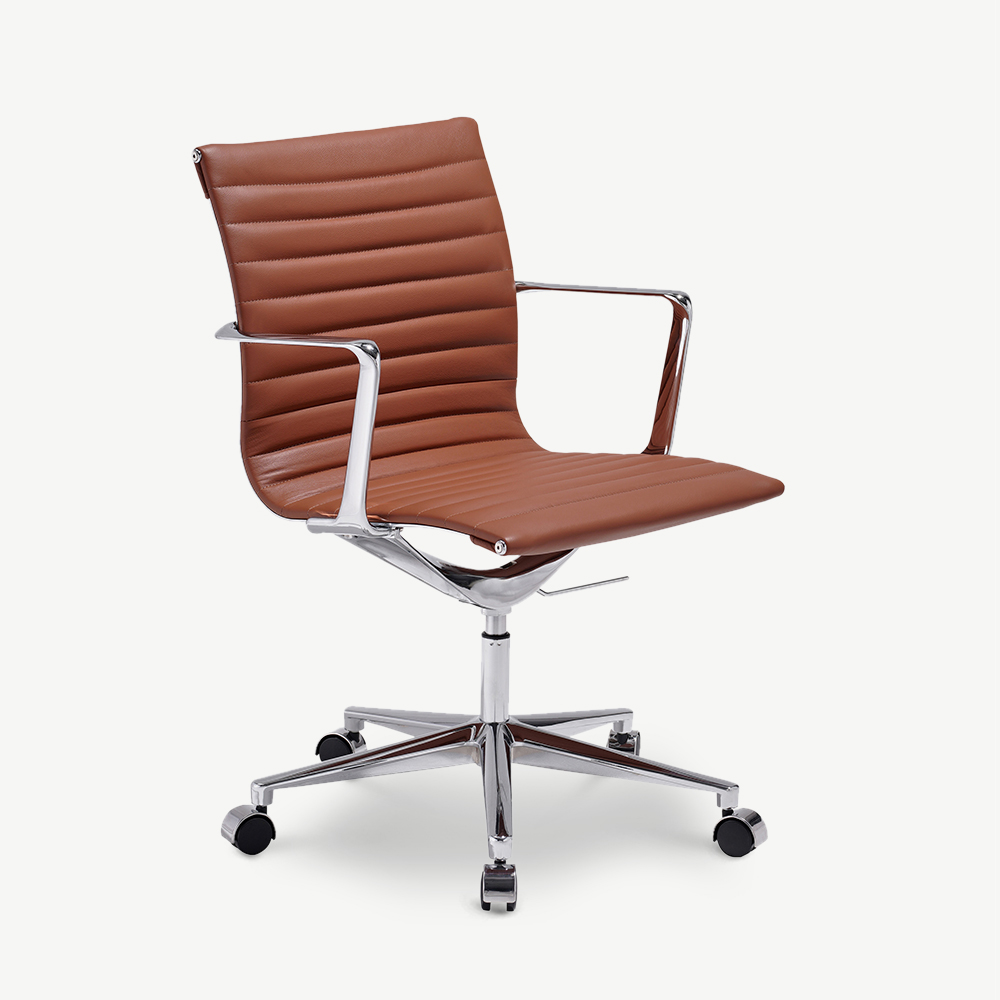
How long does it actually last?
The honest answer depends on two things: the leather grade and the room's climate. Full-grain in a steady 21 °C / 45 % RH room outlasts two gas-lift replacements. The same hide next to a south-facing window in a Madrid summer dries at the seat edge inside three years.
| Material | Climate-controlled | Radiator & summer heat |
|---|---|---|
| Full-grain leather | 15 to 25 years | 8 to 12 years |
| Corrected-grain | 10 to 15 years | 6 to 9 years |
| PU faux leather | 5 to 7 years | 3 to 5 years |
| Martindale 50,000+ fabric | 10 to 15 years | 10 to 15 years |
These figures cover the upholstery only. The frame, gas lift (DIN 4550 Class 4) and castors typically outlast the cover and can be replaced individually. A well-built office chair is a repair job, not a throwaway.
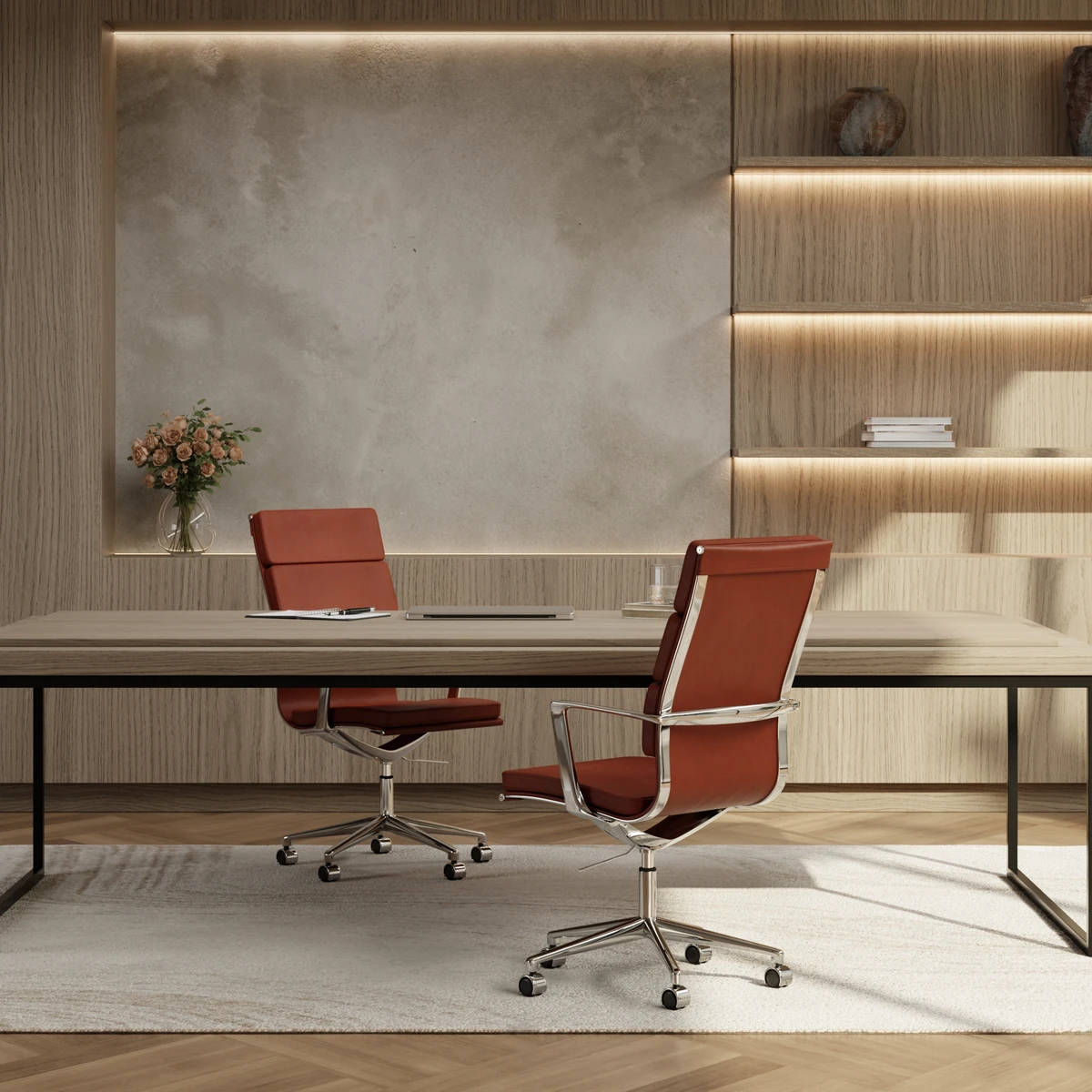
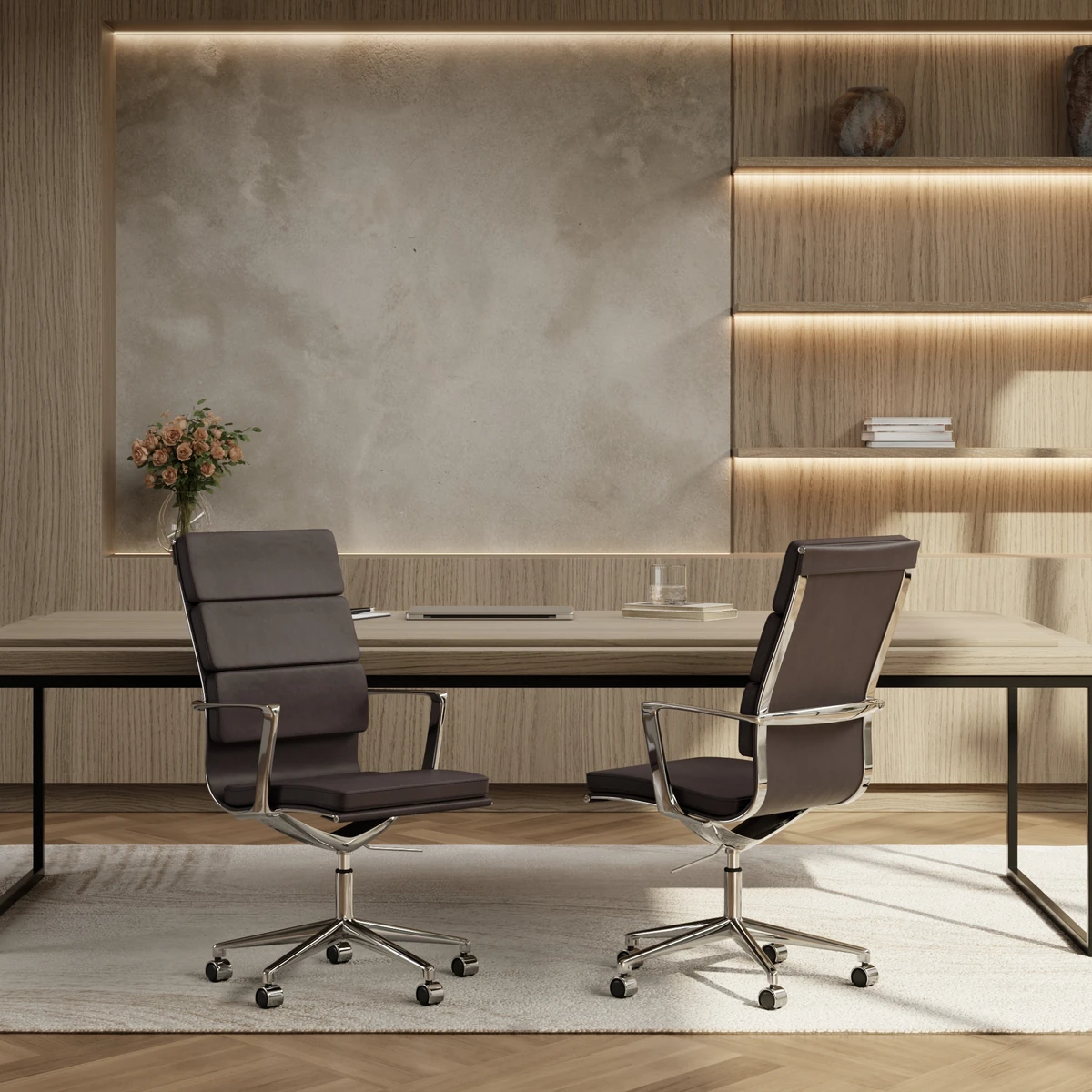
Four habits that double the cover life
Leather asks more than fabric, but not much more. Four routines turn ten years of cover life into twenty.
Is a leather office chair worth it?
Yes, if you sit at the desk more than six hours a day, the room stays under 26 °C, and you want a chair that outlasts your next office move.
Full-grain leather from €499 pays back against three consecutive PU chairs at €199 after eight years. In rooms that pass 28 °C in summer, or in vegan households, mesh or a good Martindale 50,000+ fabric is the honest call.
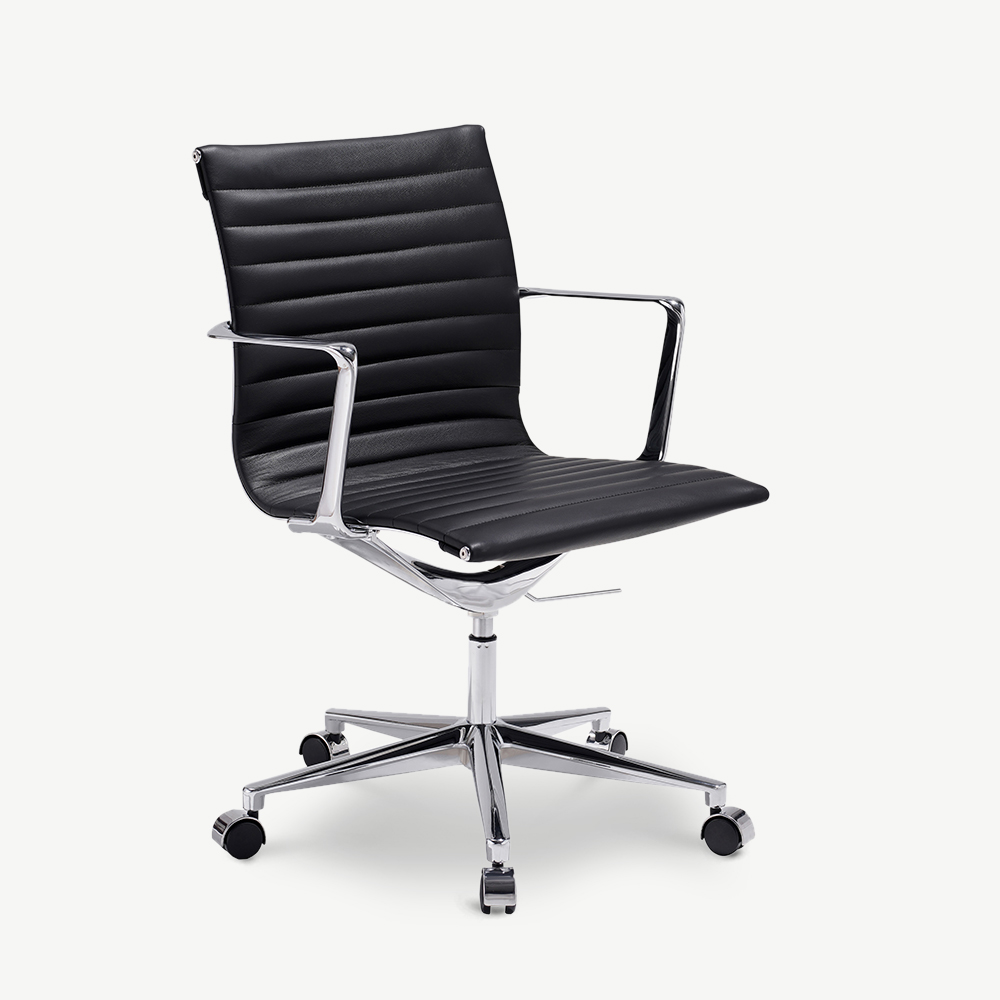
Our leather office chair selection starts at €199 (PU) and runs to €799 (full-grain). For the wider buying context see our office chair buying guide. To match leather with a calm, wood-led desk setup, the Japandi collection pairs well.
Related reads: black office chair for the classic register, or ergonomic office chair guide if back support is the deciding factor.
Frequently asked.
Which leather is best for an office chair?
Full-grain leather lasts the longest (15 to 25 years of daily desk use) but shows every mark. Corrected-grain is more scratch-resistant and runs 10 to 15 years, the pragmatic middle. PU faux leather lasts 3 to 7 years but starts cheaper at €199 to €349 and is easier to clean.
Is a leather office chair uncomfortable in summer?
Yes, leather is not breathable. At room temperatures above 26 °C the skin sticks noticeably, especially in short sleeves. Without air conditioning or cross-ventilation, mesh or fabric is more practical. In a climate-controlled office it is a non-issue.
What is the difference between real leather and PU leather?
Real leather is tanned animal hide, usually cow. PU leather is a polyurethane coating on a fabric backing. Real leather develops patina and can be conditioned; PU typically cracks from year 5 onward on the seat edge and cannot be repaired.
How do you care for a leather office chair?
Wipe real leather quarterly with a barely damp cloth, condition once a year with leather balm. Keep it away from direct sun and radiators or the surface dries and cracks at the seat within 2 to 3 years. PU leather only needs dry or lightly damp cleaning, no conditioning.
What standard should a leather office chair meet?
EN 1335 Type B as a minimum for daily office use, with a gas lift Class 4 (DIN 4550) rated for users up to 150 kg. For full-grain leather, a Martindale rub count of 50,000+ is a reliable mark of heavy-use suitability.
Are leather office chairs unfriendly to vegans?
Real leather is an animal product, so not vegan. Alternatives are high quality PU (5 to 7 years lifespan) or plant-based leathers like apple or cactus leather, although these are currently more expensive and less proven. For a vegan office, fabric or mesh is often the more honest choice.
