 9800+ TRUSTPILOT REVIEWS


 EN
EN DE
DE FR
FR NL
NL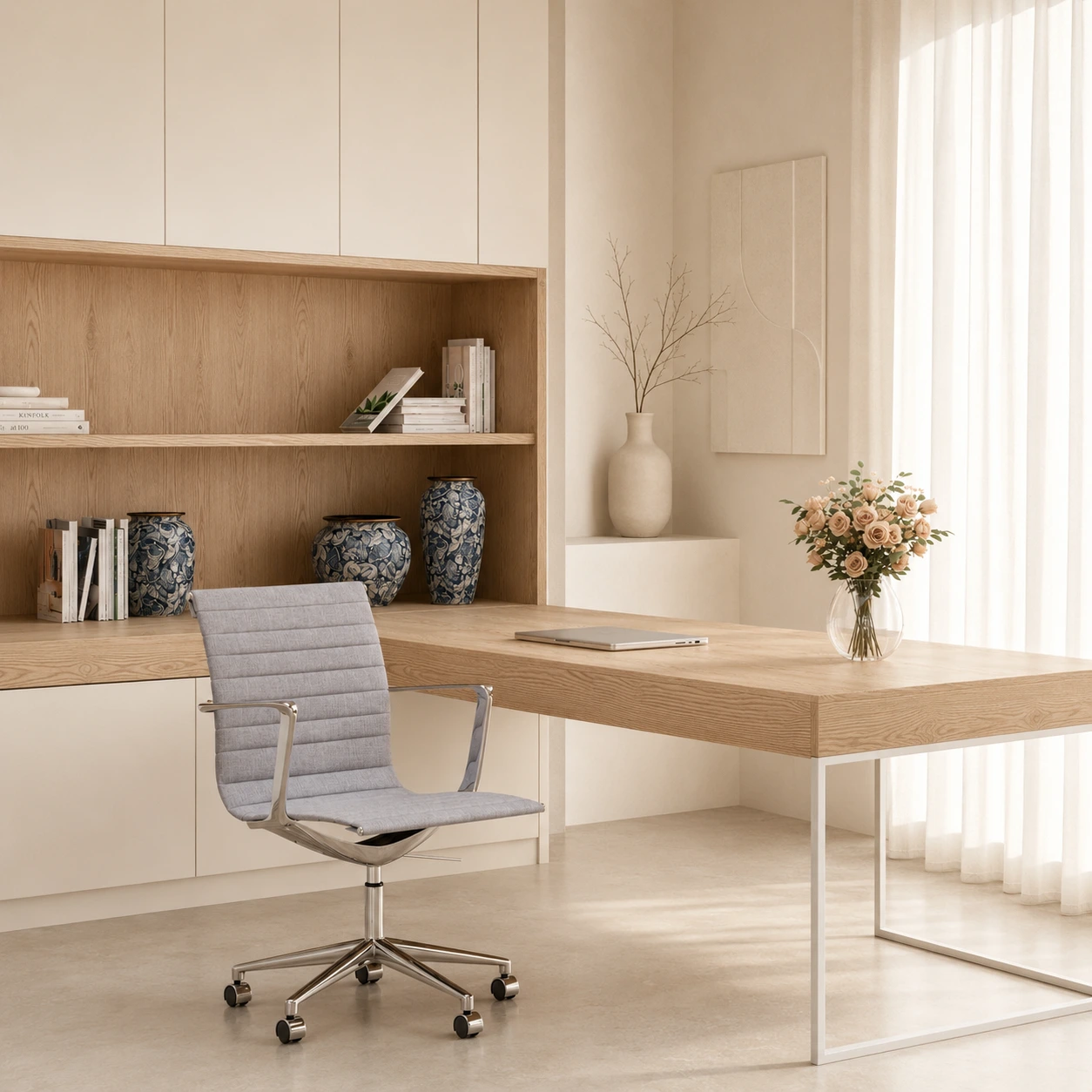
A designer office chair often promises something it cannot deliver: the silhouette of a living-room piece with the ergonomics of a task chair. In 8 out of 10 cases, one side gives way. The classic trap is the chair that looks beautiful in product photos and becomes intolerable after three hours.
This guide draws the actual line between looks and ergonomics, which styles read well in a 2026 European home interior, which materials hold up, and where compromise is acceptable. With a realistic budget: 199 to 499 euros for a chair that lasts seven years without regret.
The home desk has become part of the living space
In 2026, just under half of European knowledge workers spend at least one day a week working from home. The desk corner is no longer hidden in a dedicated room. It lives in the living room, in the bedroom, in a corner of the dining space. The chair is visible all day, the way a sofa is.
That changes the brief. A standard open-plan task chair functions well on a video call but reads as out of place in a curated interior. Demand for chairs that read more like a lounge piece has grown sharply, which opens an aesthetic trap: a chair that pays for its looks with poor ergonomics.
- Daily visibility: in a small flat, the chair stays in view 12 hours a day
- Coherence with the room: must speak to the sofa, the desk, the walls
- Video call presence: the backrest behind you reads as part of your professional image
Three design directions in 2026
The word designer covers very different visual worlds. Identify your interior style before comparing models. Three directions cover most of the European market.
Japandi
Curved shell in oak or ash, seat in beige, oat or greige fabric, wooden base on discreet castors. Seat height usually 44 to 52 cm. Sits well alongside linen, ceramic and pale wood.
Limit: the wooden base often rules out a continuous gas-lift adjustment. Height adjusts by notch instead. Fine for 4 hours of work a day, less so above that.
Scandinavian
Upholstered shell, mid-height back, dusty grey, petrol blue or sage green fabric. Slim metal legs, often crossed or five-star. Class 3 or 4 gas lift. Adjustable seat height 42 to 54 cm.
The best design-ergonomics compromise for most home offices. Decent lumbar support (not maximal), silhouette that sits naturally next to a sofa.
Contemporary
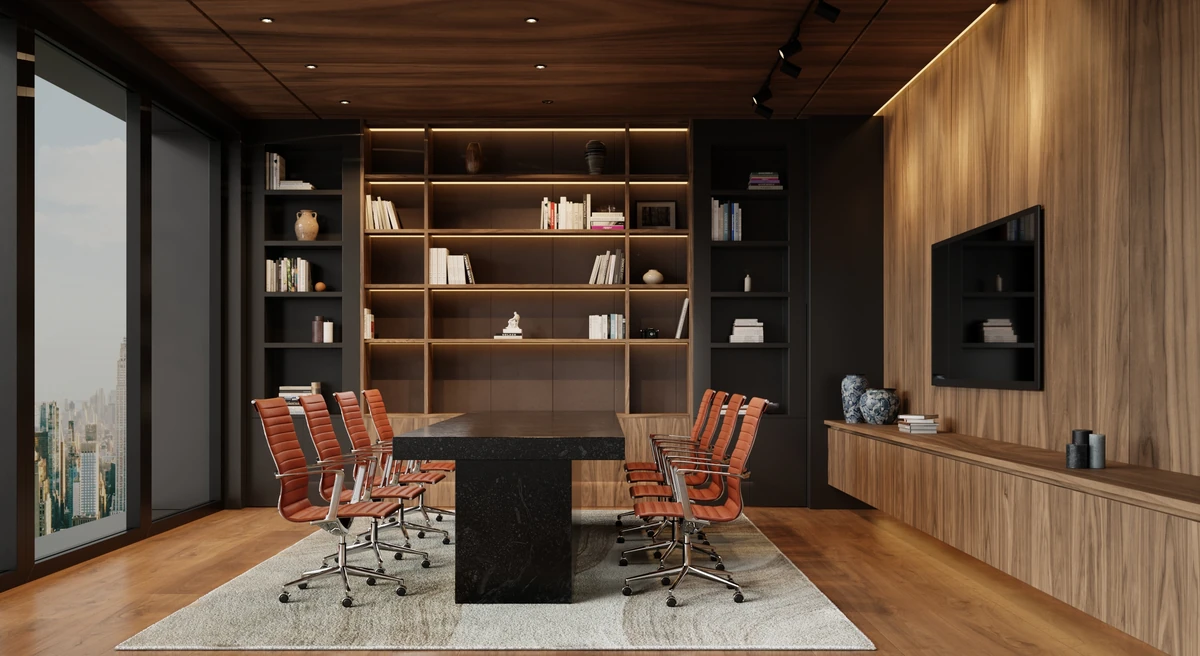
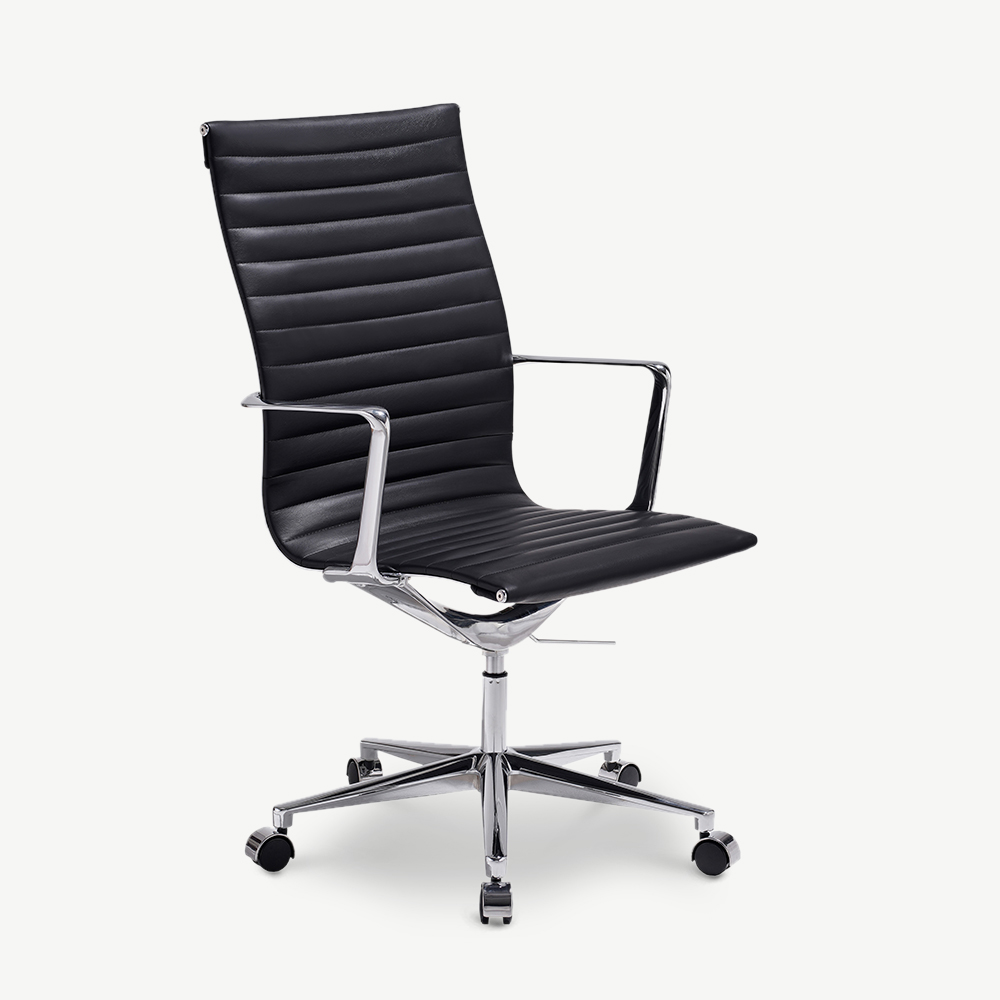
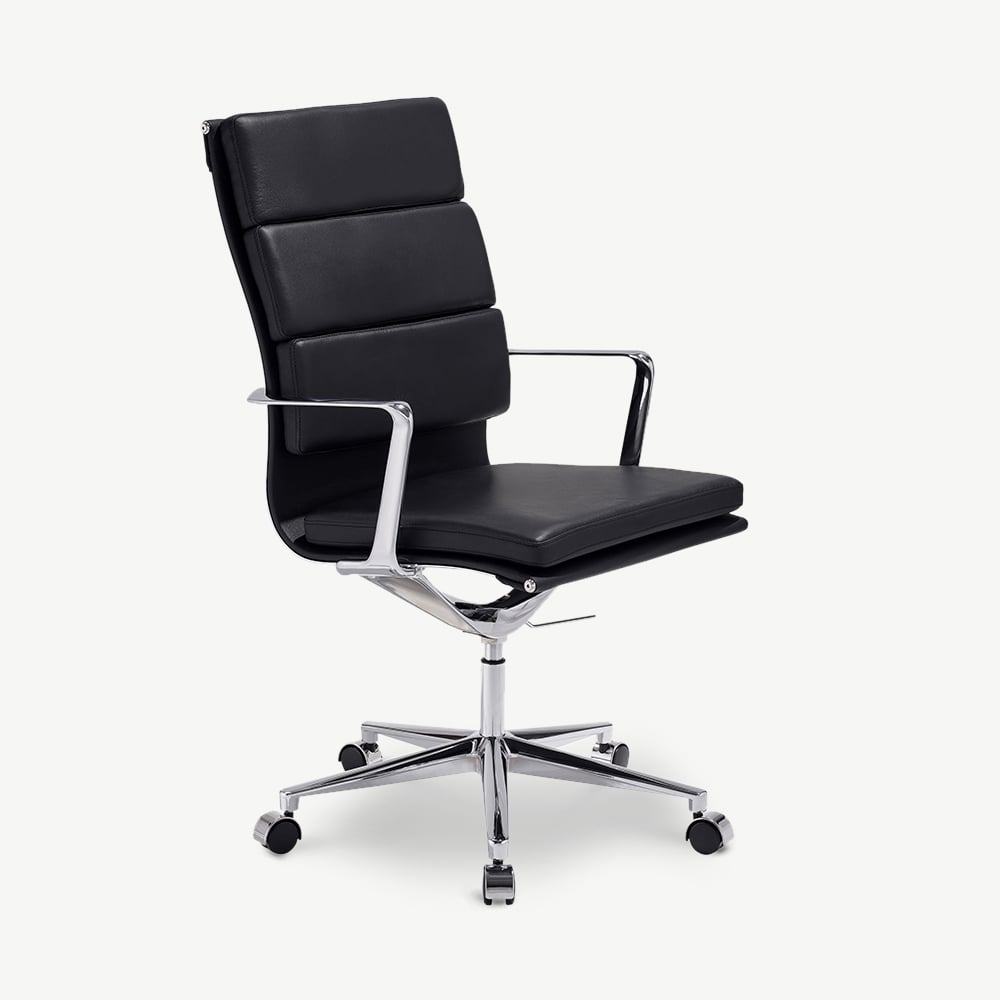
Bauhaus and mid-century cues. Black, charcoal or cognac leather over a chrome or polished aluminium base. Geometric profile, tufted or ribbed back. Adjustable seat 45 to 55 cm. Class 4 gas lift.
More formal, works better in a study than a corner of the living room. Real leather doubles the budget; well-made black PU stays credible.
Featured in this guide
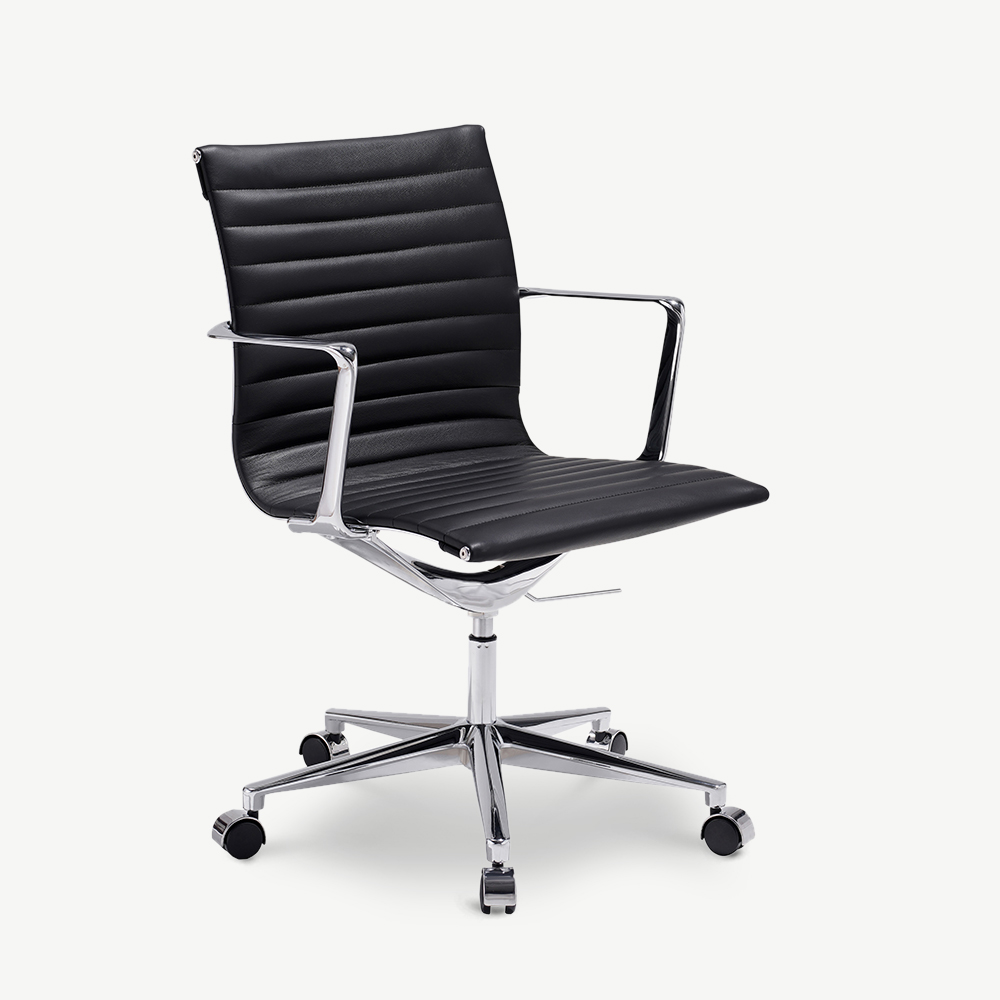
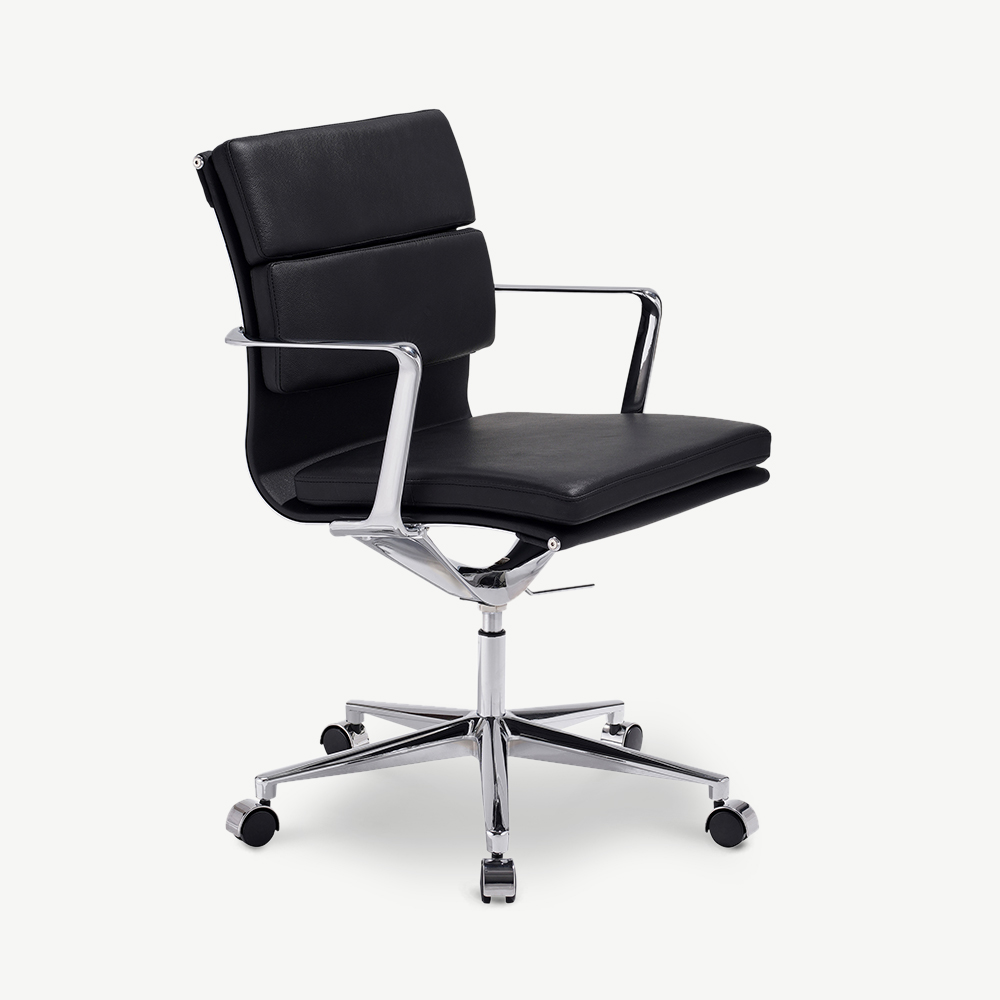

The minimums you should never sacrifice
A designer chair can give up certain ergonomic features without trouble. Others wreck your back within months. The line that matters:
| Feature | Acceptable sacrifice | Non-negotiable |
|---|---|---|
| Seat height | Notch adjust (Japandi) | Range 42 to 54 cm minimum |
| Backrest | Curved rather than reclining | Height 50 cm minimum |
| Tilt | Limited range (100 to 115 deg) | Must exist, even if limited |
| Armrests | Fixed or absent | If present: not too high |
| Lumbar | Natural backrest curve | Clear arch 15 cm from base |
Simple rule: if you work more than 4 hours a day on it, refuse any chair without a class 4 gas lift and tilt adjustment. Neither is visible in product photos, but together they determine whether the chair still feels tolerable after three years.
Fabric, velvet, leather: what lasts and what shows wear
Material drives the look but also the service life. A designer chair in full-grain leather left unmaintained ages worse than a Kvadrat fabric that gets vacuumed. The five options and how they behave over five years:
The honest verdict on designer office chairs
For daily use (4 to 8 hours), Scandinavian style with a class-4 gas lift and premium polyester fabric is the best compromise between aesthetics and all-day support.
Browse our office chair collection, spanning Scandinavian shell chairs to full-grain leather executive models. Our complete office chair buying guide covers ergonomics in depth if you want to set the basics first.
If you prefer a quieter neutral colour, read our beige office chair guide. For wider room coordination, the Japandi collection remains the most balanced backdrop for most European interiors.
Frequently asked.
Is a designer office chair as ergonomic as a classic task chair?
Often not. Many designer chairs trade lumbar support and seat-depth adjustment for a slimmer silhouette. If you work more than 4 hours a day, insist on the minimum: seat height range 42 to 54 cm, backrest at least 50 cm tall, and tilt adjustment. Without these three, the looks come at the cost of your back.
Which design style fits my interior?
For Japandi: light wood, straight lines, natural fabric in beige or off-white. For Scandinavian: slim wood or metal legs, shell silhouette, soft fabric in dusty grey or blue. For contemporary: leather or PU in black, polished aluminium or chrome legs, geometric profile. Three distinct visual worlds, three distinct shopping logics.
What does a real designer office chair cost?
Plan 199 to 299 euros for an entry-level designer chair with usable ergonomics. Between 299 and 499 euros you get better upholstery (real leather, Kvadrat fabric), a more solid mechanism and a 5 to 8 year warranty. Under 149 euros, designer usually refers only to the photo; real service life is 3 to 4 years.
How do I match a designer chair with a wooden desk?
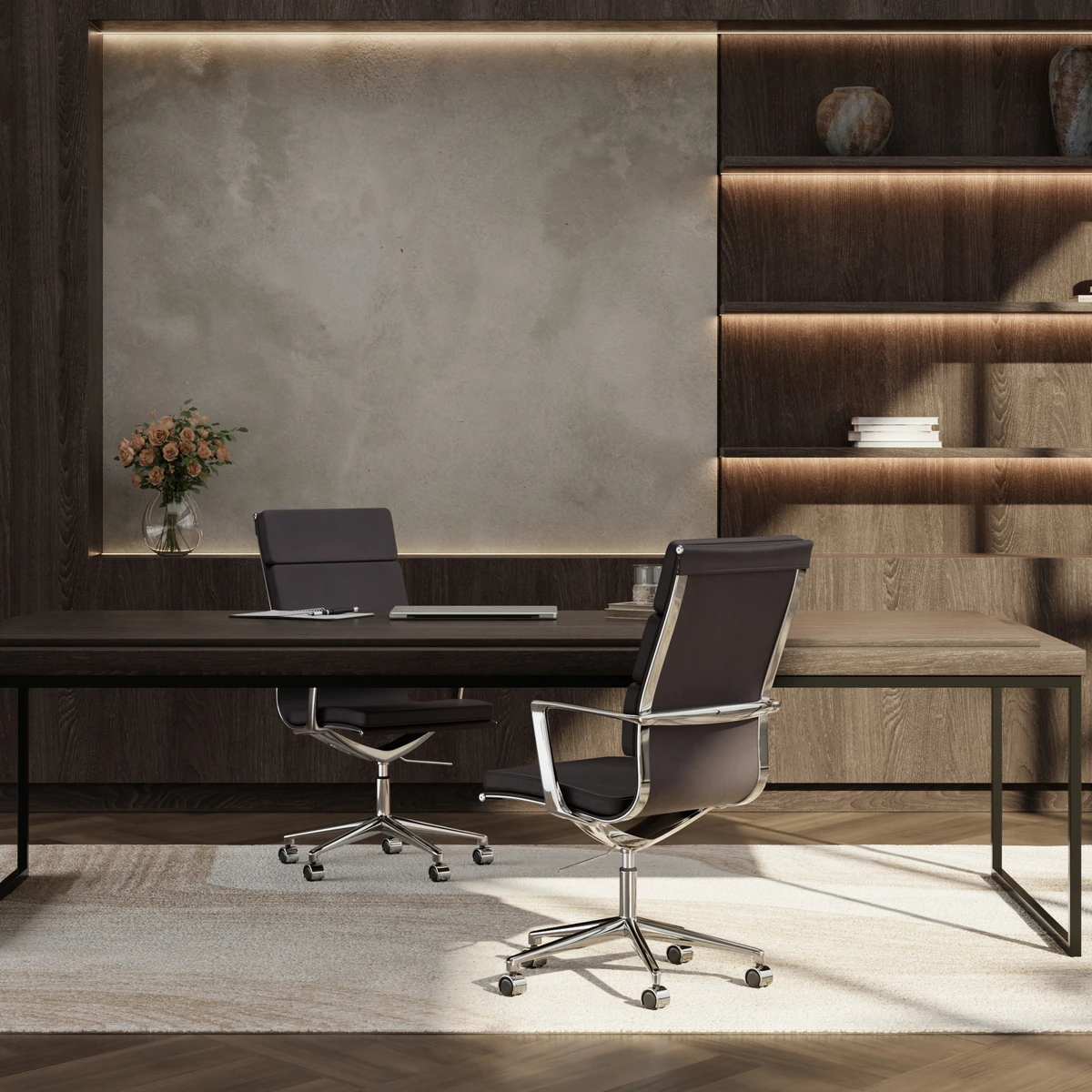
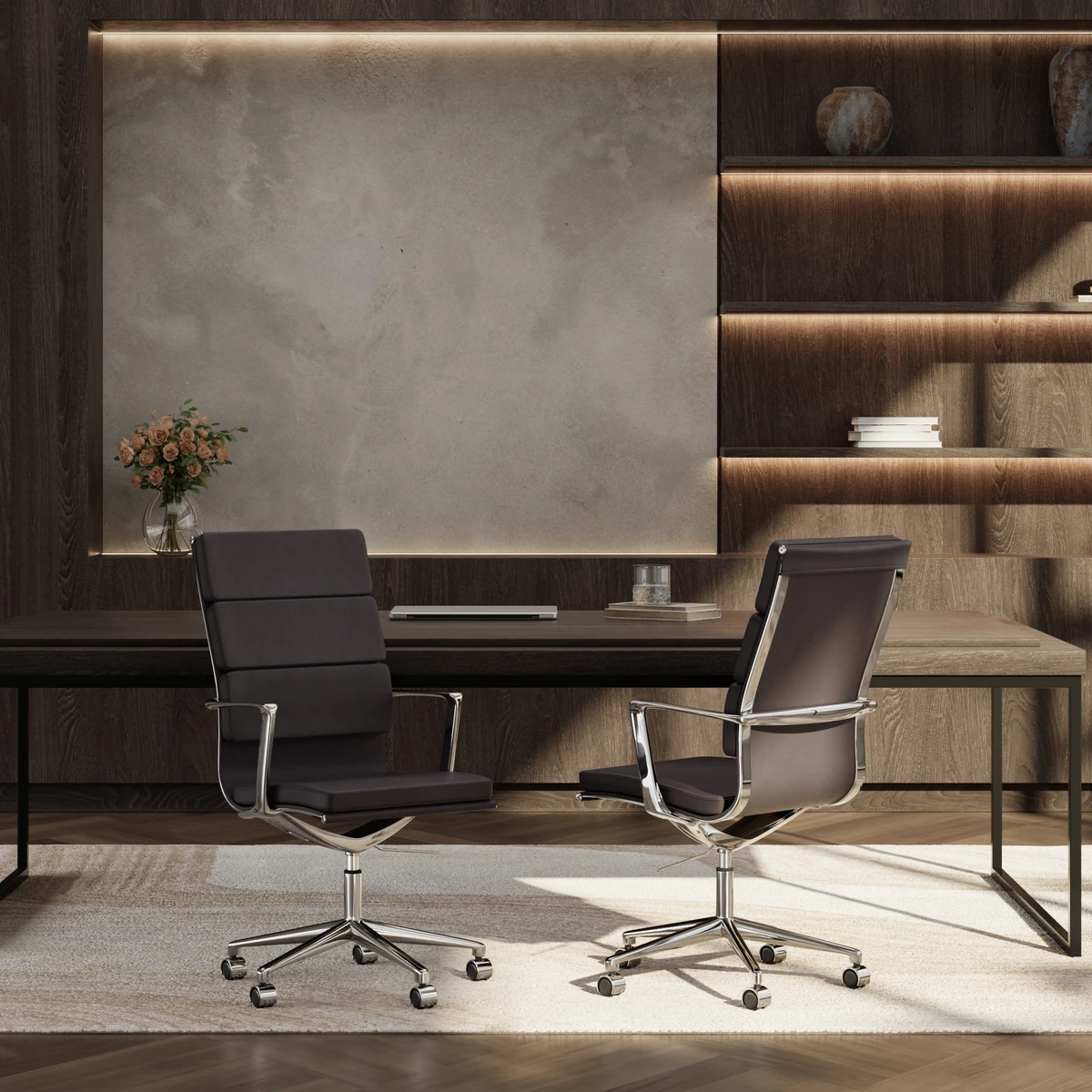
Favour contrast over uniformity. Light oak desk with a black or anthracite chair: balanced. Dark walnut desk with an off-white or pale fabric chair: balanced. Wood on wood (wood-base chair + wood desk) requires the species to match or stay closely related, otherwise the room reads muddled.
What is the right seat height for a designer office chair?
For a standard desk of 72 to 75 cm, the useful seat-height range is 42 to 54 cm. Set correctly, your elbows land at 90 degrees on the desk and your feet rest flat on the floor. A chair whose range starts too high (say 48 cm minimum) excludes users below 170 cm.
Is velvet a good choice for an office chair?
Possible but demanding. Velvet pulls dust and shows seat marks more than woven fabric. If you go for it, choose synthetic velvet rated above 40,000 Martindale rather than cotton velvet, and vacuum weekly. Avoid in a room with long-haired pets.
