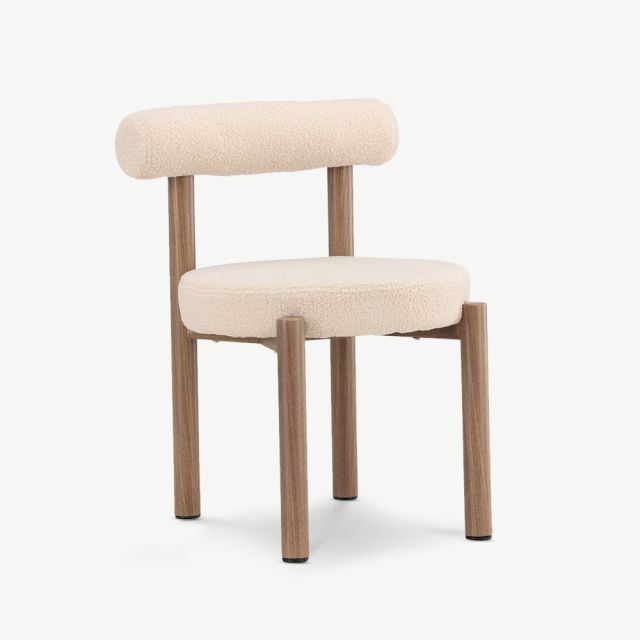
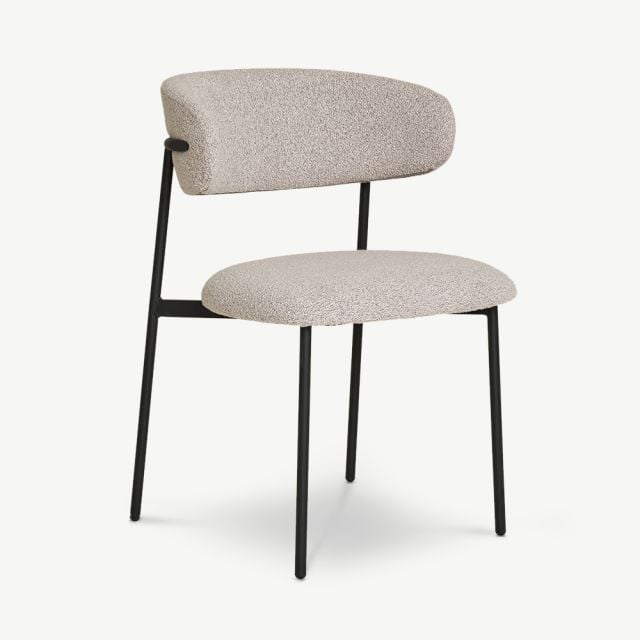
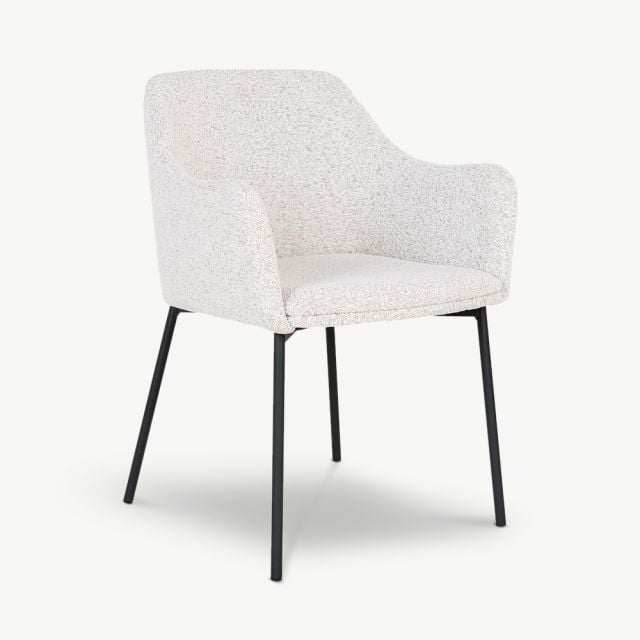
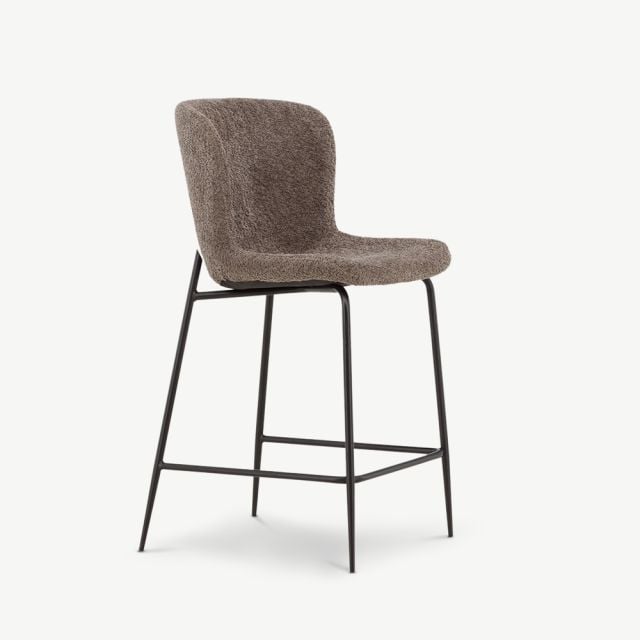
9900+ TRUSTPILOT REVIEWS




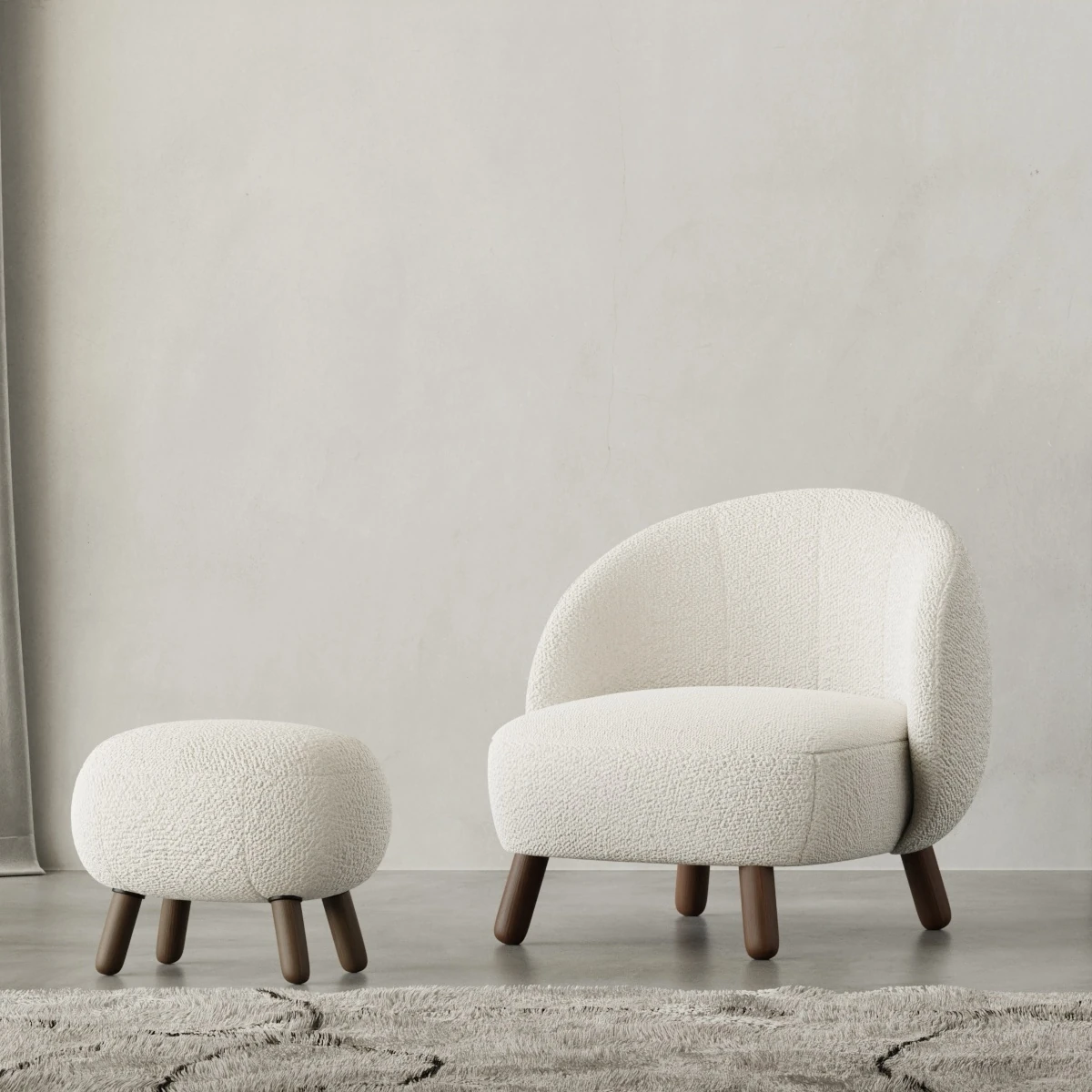
Boucle is not a fibre. It is a yarn construction, spun with irregular loops that stand out from the base weave, and that is what creates the nubby surface. It matters more than it sounds: two chairs can both be sold as boucle and feel completely different after three years. The word describes the look, not the quality.
This guide covers the five specifications that actually predict how a boucle chair ages, which colours stay clean in daily use, how boucle copes with children and pets, and how to clean it without damaging the loops. Browse the range at boucle chairs and The Boucle Beauties Collection.
A loop, not a fibre
The name comes from the French boucler, to loop or curl. During spinning, two or more yarns run together at different tensions, and the looser one forms loops that a binder thread holds in place. The result is a surface that breaks up light, which is why boucle reads as softer and warmer than a flat fabric even before you touch it.
The consequence for buying is simple: boucle can be made from almost anything, and the looped look alone tells you nothing about how it will wear.
- Wool-rich (40%+): loops spring back and hold their shape
- Cotton and viscose blends: soft hand, middling durability
- Polyester: cheaper and easy to clean, but loops flatten permanently
Boucle, teddy and sherpa
Retailers use these three words loosely, but they behave differently in a real home. Here is what each one is, and where each one fails.
Boucle
Closed loops standing proud of the base weave. The most robust-looking of the three, with a surface that hides ordinary marks well.
Weak point: a loop is exactly the right shape for a claw or a zip to hook, and a single pulled loop can run.
Teddy
A short, dense pile that feels evenly soft all over, closer to a fleece than a weave. No loops to catch, so it copes better with pets.
Weak point: the pile flattens in patches exactly where you sit, and those patches catch the light.
Sherpa
Curled pile that imitates lambswool, thicker and more voluminous than teddy. Reads as the warmest and most textured of the three.
Weak point: it mats under heavy friction, so it suits an occasional chair better than a daily one.

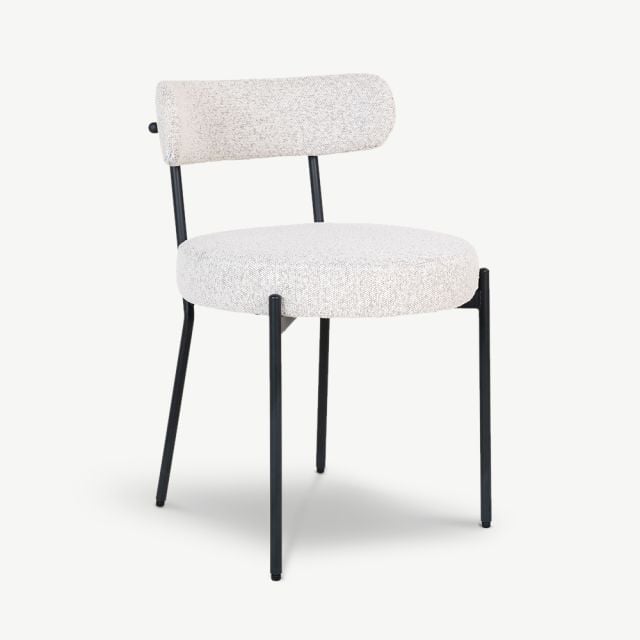
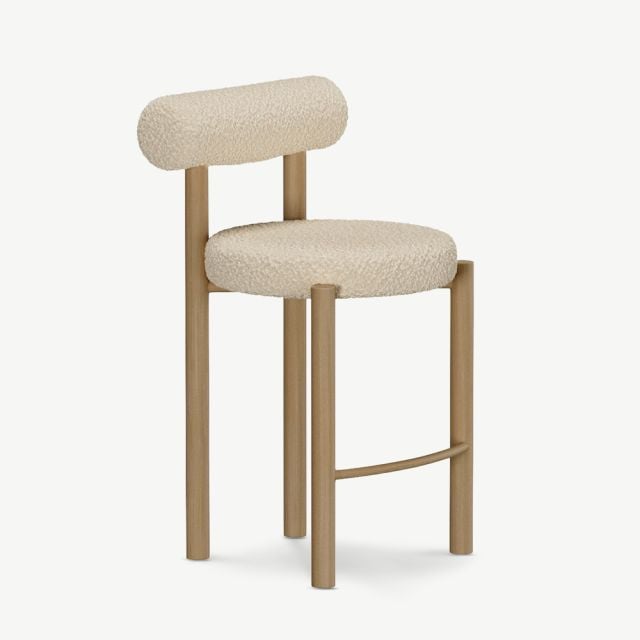
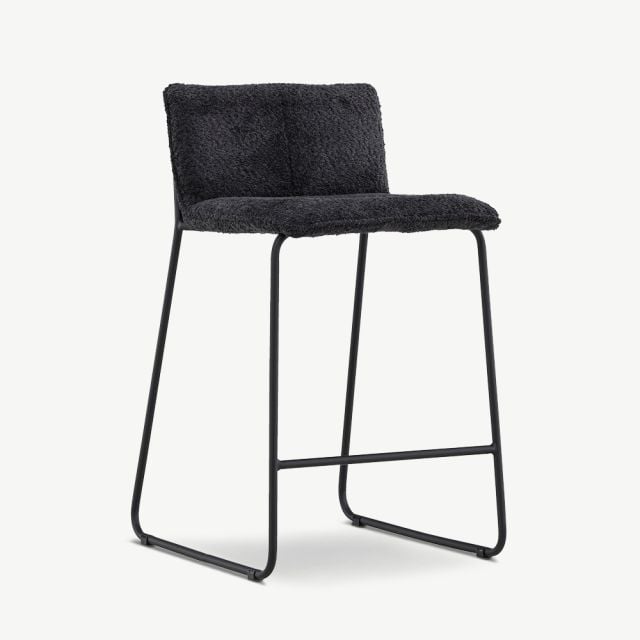
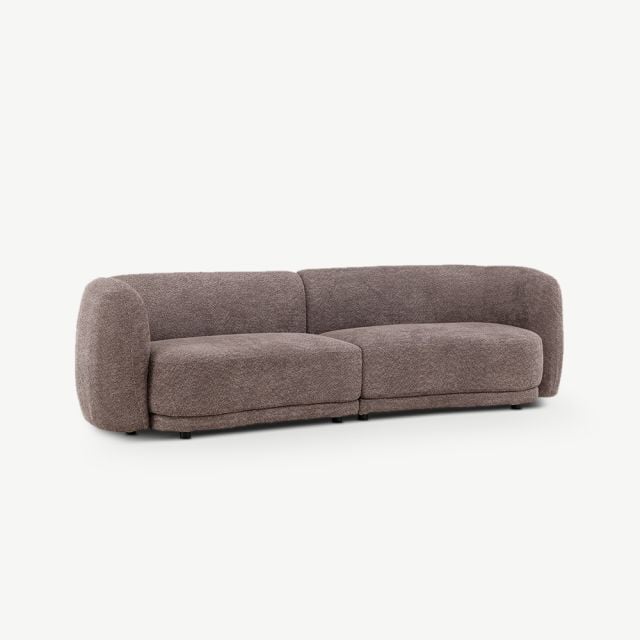
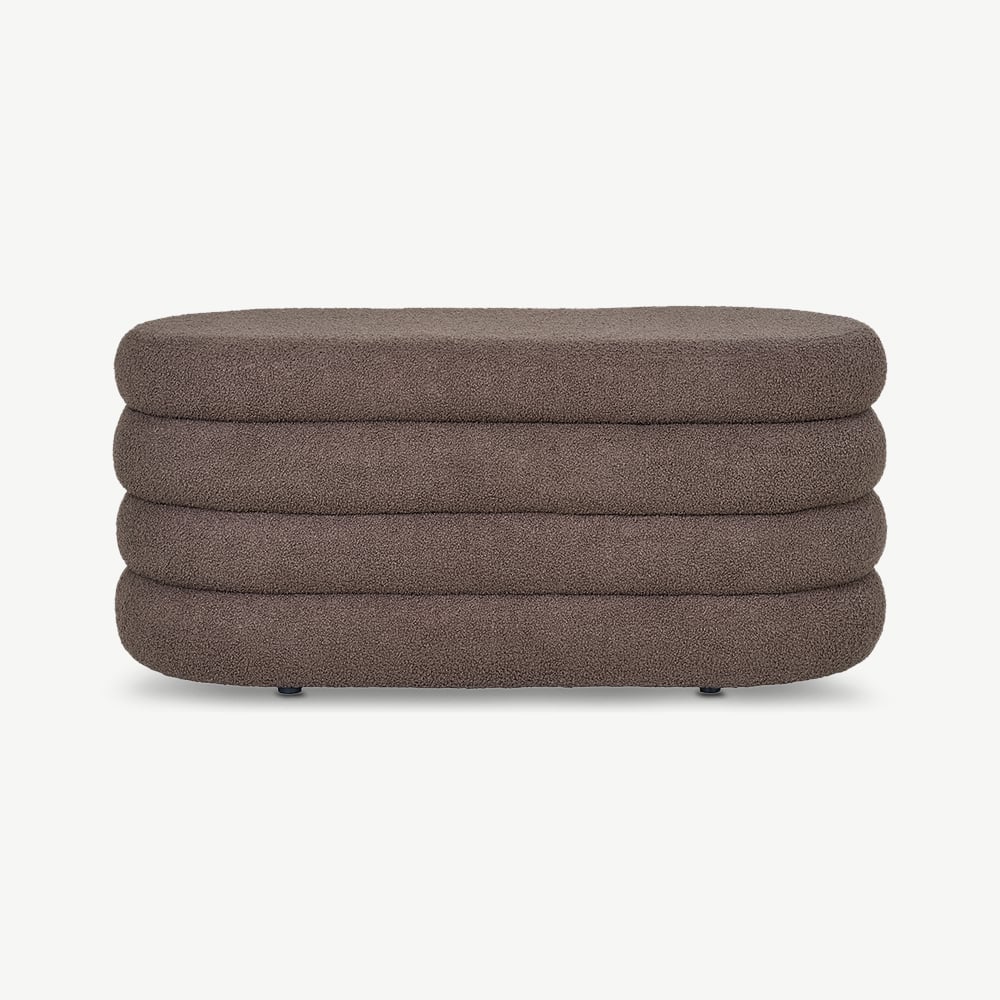
Boucle pieces from this guide




Five specifications that actually tell you something
Most of what predicts how a boucle chair ages is printed on the label. These five numbers are worth asking for before you buy, and worth walking away over if nobody can answer.
Which colours stay clean
Boucle's texture traps more than a flat weave does, so colour choice has real practical consequences, not just aesthetic ones.
- Best in daily use: oatmeal, mushroom, taupe and warm greige, which carry enough tonal variation to disguise ordinary marks
- Hardest work: bright white and very pale cream, which look superb for about six months and need real maintenance after that
- Underrated: mid-brown, clay and deep olive, where the loop structure gives darker colours a depth flat fabrics cannot achieve, and which hide everything
Boucle with children and pets
Boucle is better with children than its reputation suggests and worse with cats than people expect.
With children, the texture is forgiving of crumbs and dry marks, which brush out. Liquid is the only real issue, and it is manageable if you reach it quickly. A wool-rich boucle in a mid tone handles family life perfectly well.
With cats, the problem is structural rather than about wear. A loop is exactly the right shape for a claw to hook, and a single pulled loop runs. If you have a cat that scratches furniture, teddy or a tight flat weave is the safer choice. Dogs are much less of a problem, though shedding shows more on textured fabric than flat.
Cleaning without damaging the loops
Boucle needs slightly more attention than a flat weave, but not much, and never the things people reach for first.
Is boucle still in style?
One boucle piece is a choice. Four is a phase.
Boucle has been the signature upholstery of the last few years, and some designers now consider it over-exposed. In practice that is narrower than it sounds. Boucle across a whole room, on the sofa and the chairs and the cushions, already looks dated. Boucle on one sculptural chair in a room where nothing else has that texture still looks deliberate, and will continue to.
Which is exactly why the specifications matter more now than they did three years ago: a boucle chair bought on quality still looks considered in five years, while one bought on trend alone looks tired the moment the trend does. Browse the current range at boucle chairs, or see the wider Boucle Beauties Collection.
Frequently asked.
What is boucle fabric?
Boucle is a yarn construction rather than a fibre. Yarns are spun at different tensions so the looser one forms loops that stand out from the base weave, creating the characteristic nubby surface. Boucle can be made from wool, cotton, viscose, polyester or a blend, so the looped look alone says nothing about durability.
Is boucle hard to keep clean?
Boucle needs slightly more attention than a flat weave because the loops trap more, but it is manageable. Vacuum weekly with an upholstery brush on low suction, blot spills immediately without rubbing, and use only a barely damp cloth with pH-neutral cleaner. Choosing a mid tone rather than bright white makes the biggest practical difference.
Is boucle good for a dining chair?
Yes, if the specification supports it. Look for wool content above 40 percent, a Martindale rub count above 25,000 and a pilling rating of 4 or higher. Boucle sold at lower specifications is better suited to an occasional armchair than to a chair used at the table every day.
Does boucle pill?
Low-specification boucle pills, particularly on the arms and the seat front. Check the pilling rating, graded 1 to 5. At 4 or above the fabric stays smooth in normal use; at 3 or below expect small bobbles within the first year. Wool-rich boucle resists pilling better than all-polyester.
What is the difference between boucle and teddy fabric?
Boucle has closed loops standing proud of the base weave and feels nubby and textured. Teddy has a short dense pile and feels uniformly soft and fleecy. Boucle's weak point is loops being pulled by claws or zips; teddy's is the pile flattening in patches where you sit.